

News|Articles|March 10, 2026
FDA clears phase I/II trial of SVT-001 cell therapy for familial drusen–associated vision loss
Fact checked by: Martin David Harp
FDA greenlights first human trial of SVT-001, a regenerative cell therapy aiming to restore vision for patients with rare familial drusen.
Advertisement
The US Food and Drug Administration (FDA) has cleared an investigational new drug (IND) application allowing initiation of a phase I/II clinical trial evaluating SVT-001, an investigational regenerative cell therapy for patients with familial drusen, an inherited macular degeneration disorder. According to an announcement from developer Sanaregen Vision Therapeutics, the early-phase study will assess the safety and preliminary efficacy of the therapy for improving retinal function and restoring vision in affected individuals.¹
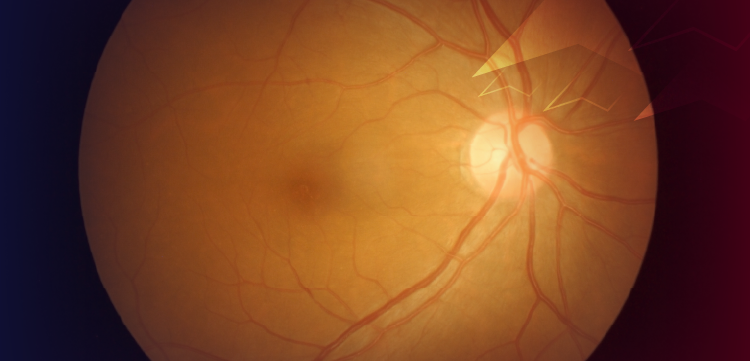
Familial Drusen—also referred to as Doyne honeycomb retinal dystrophy or Malattia Leventinese—is a rare inherited retinal disorder characterized by early accumulation of drusen beneath the retinal pigment epithelium (RPE). Progressive central vision loss often begins in mid-adulthood, typically around the fourth decade of life.² Currently, no disease-modifying therapies are approved for this condition, and management generally focuses on monitoring and supportive care.
Trial Overview
Details about the forthcoming phase I/II trial remain limited in the publicly available announcement, including study size, specific eligibility criteria, and endpoints. According to the company, the study will evaluate both safety and early signs of efficacy, including improvements in retinal function and visual outcomes.
Early-phase trials of regenerative retinal therapies typically focus on safety signals, such as inflammatory responses, immune reactions, or complications related to intraocular administration. Secondary exploratory outcomes may include measures of visual acuity, microperimetry, retinal imaging biomarkers, or functional electrophysiologic testing.
The investigational therapy, SVT-001, is described as a cell-based regenerative treatment designed to restore retinal function. The company has not yet disclosed detailed information about the specific cell type, manufacturing process, or delivery method in the press release. Such information will likely emerge once the trial is registered or when preliminary data become available.
Disease Background and Clinical Context
Familial drusen is most commonly associated with a missense mutation in the EFEMP1 gene, which encodes fibulin-3, an extracellular matrix protein involved in maintaining retinal structural integrity.³ Mutations in EFEMP1 lead to abnormal deposition of drusen-like material between the retinal pigment epithelium and Bruch’s membrane. Over time, this accumulation can disrupt retinal architecture and impair photoreceptor function.
Although Familial Drusen is rare, its pathologic features overlap with those observed in age-related macular degeneration (AMD), particularly the formation of drusen and eventual geographic atrophy in advanced stages.⁴ Because of these similarities, investigators have long considered whether insights from inherited drusen disorders might inform treatment strategies for more common degenerative macular diseases.
Currently approved therapies for AMD largely target neovascular (wet) disease using intravitreal anti-vascular endothelial growth factor agents. In contrast, treatment options for non-neovascular or atrophic retinal degeneration remain limited. Recently approved complement pathway inhibitors for geographic atrophy can slow lesion growth but do not restore vision or reverse retinal damage.⁵
This therapeutic gap has driven increasing interest in regenerative approaches, including stem cell–based retinal pigment epithelium replacement, photoreceptor regeneration strategies, and other cell-based interventions intended to restore retinal function.
Cell Therapy in Retinal Degeneration
Cell-based therapies have been investigated in several degenerative retinal conditions, including AMD and inherited retinal dystrophies. Early clinical trials involving human embryonic stem cell–derived retinal pigment epithelial cells have demonstrated feasibility and acceptable safety profiles, though functional visual improvements have been variable.⁶
The investigational SVT-001 program appears to fall within this broader effort to use regenerative medicine strategies to repair or replace damaged retinal cells. However, until peer-reviewed data or detailed clinical trial protocols become available, the mechanism of action and potential clinical benefit remain uncertain.
Limitations and Next Steps
At present, the evidence supporting SVT-001 is limited to preclinical work and the regulatory clearance to begin human trials. Without published data or trial registry details, key questions remain about the therapy’s mechanism, durability of effect, and safety profile.
Early-phase trials primarily assess safety and feasibility; therefore, conclusions about efficacy will likely require larger, controlled studies in the future. Additionally, the rarity of familial drusen may pose challenges for patient recruitment and statistical power.
If early results demonstrate safety and meaningful visual improvement, the therapy could potentially inform broader regenerative strategies for retinal degenerative diseases, including AMD. However, such extrapolation remains speculative at this stage.
For now, the FDA’s IND clearance represents an initial step toward clinical evaluation of a regenerative approach for a rare inherited macular degeneration with no currently approved disease-modifying treatment.
References
Sanaregen Vision Therapeutics. FDA clears phase I/II clinical trial of SVT-001 for familial drusen. Company press release. Accessed March 6, 2026. https://sanaregen.com
Evans K, Gregory CY, Sparrow JM, et al. Doyne honeycomb retinal dystrophy (Malattia Leventinese): clinical features and genetic mapping. Eye (Lond). 1997;11(Pt 4): 503-508. https://doi.org/10.1038/eye.1997.137
Stone EM, Lotery AJ, Munier FL, et al. A single EFEMP1 mutation associated with both Malattia Leventinese and Doyne honeycomb retinal dystrophy. Nat Genet. 1999;22(2):199-202. https://doi.org/10.1038/9722
Mullins RF, Russell SR, Anderson DH, Hageman GS. Drusen associated with aging and age-related macular degeneration contain proteins common to extracellular deposits associated with atherosclerosis and amyloidosis. FASEB J. 2000;14(7):835-846. https://doi.org/10.1096/fasebj.14.7.835
Liao DS, Grossi FV, El Mehdi D, et al. Complement C3 inhibitor pegcetacoplan for geographic atrophy secondary to age-related macular degeneration: phase 3 OAKS and DERBY trials. Lancet. 2023;402(10401):1434-1448. https://doi.org/10.1016/S0140-6736(23)01278-4
Schwartz SD, Regillo CD, Lam BL, et al. Human embryonic stem cell–derived retinal pigment epithelium in patients with age-related macular degeneration and Stargardt’s macular dystrophy: follow-up of two open-label phase 1/2 studies. Lancet. 2015;385(9967):509-516. https://doi.org/10.1016/S0140-6736(14)61376-3
Advertisement
Related Content
Advertisement




Latest CME














Advertisement
Advertisement