Guidance includes building on existing science, reducing redundant testing, and accelerating treatments for rare and life-threatening diseases

Lynda Charters Enoch started her early “eye life” at the Schepens Eye Research Institute, Boston, which ultimately culminated in her current position as an Editor of Ophthalmology Times.
Guidance includes building on existing science, reducing redundant testing, and accelerating treatments for rare and life-threatening diseases

Wireless brain implant taps visual cortex to deliver artificial sight, marking third successful surgery and recruiting volunteers for trials.

Phase 3 data show brolucizumab outperforms laser for PDR vision preservation, with fewer adverse events—while monitoring inflammation risk.
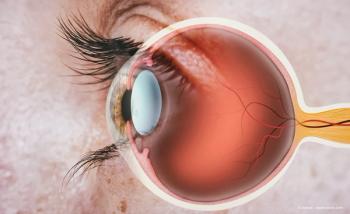
Early phase II results show topotecan episcleral chemoplaque offers accessible, localized retinoblastoma treatment with mixed responses, aiming to expand global eye-sparing care.
Explore latest RVO care: faricimab, Eylea HD, and biosimilars that cut injection burden and protect vision from macular edema.

Tattoo ink inflammation increasingly triggers uveitis, often harming vision and requiring systemic steroids.

Images showed that Parkinson’s disease is associated with a thicker photoreceptor nuclear layer and a thinner layer of photoreceptor processes.

Three real-world GA cases reveal why early imaging-guided treatment matters, how fast vision can decline, and how to manage CNV risk with anti-VEGF.

Study finds low-vision rehab boosts daily function and quality of life, but exposes gaps in long-term data and diverse research.

Aflibercept briefly reverses severe ROP in tiny preemies, yet nearly half relapse within weeks—prompting laser rescue and renewed safety questions.

The successful completion and the milestone payment “provide Galimedix with an important operational runway to proceed with plans for additional clinical development in Alzheimer’s disease and other indications."

The results of a multicenter controlled clinical trial showed that the device resulted in “a significant improvement in visual acuity (VA) from baseline to month 12.


Optoretinography is an emerging technology used to test light-evoked photoreceptor activity.
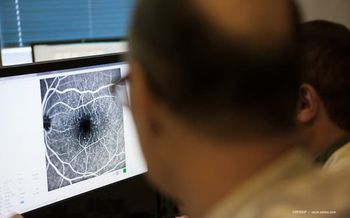
Imaging and biomarkers are driving earlier, more individualized GA treatment

Researchers uncover a DNA repair mechanism in Greenland sharks that preserves their vision for centuries, offering insights into longevity and eye health.

Strategies for treatment intervals, drug selection, and patient expectations.
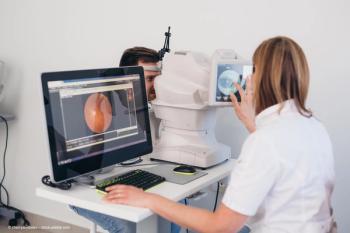
A recent study represents a step forward in investigations of the retinal layers as they are affected by glaucoma.
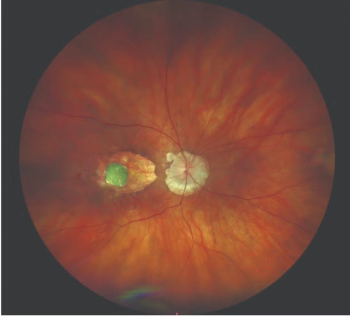
The novel system converts light into electrical signals to stimulate retinal cells.

Explore early MacTel diagnosis with OCT/FA, who qualifies for Encelto implant, and how costs, reimbursement, and surgery shape timely retina care.

The FDA noted in the letter that it is unable to approve the application for ONS-5010/LYTENAVA (bevacizumab-vikg) in its current form for the treatment of wet AMD.


AI revolutionizes ophthalmology with enhanced diagnostics, personalized treatments, and improved surgical precision, offering better patient outcomes and efficient clinical trials.

Atrophy Advisor aids physicians in personalizing treatment for geographic atrophy in age-related macular degeneration, enhancing patient care and outcomes.
Lock in patient adherence with discussion of study results.

Remote monitoring of age-related macular degeneration enhances patient care, reduces treatment burden, and leverages AI for personalized management.

Innovative multimodal deep learning models enhance non-invasive chronic kidney disease screening by integrating retinal images and urine dipstick data for improved accuracy.

The Portal extension trial reveals that the Port Delivery System significantly improves vision in AMD patients, showcasing long-term efficacy and durability.
New treatments show promise in preventing fibrosis in neovascular AMD, addressing a critical need for improved visual outcomes in patients.


September 17th 2020