

Commentary|Articles|February 24, 2026
Q&A: AI-predicted retinal function shows promise in geographic atrophy
Steffen Schmitz-Valckenberg, MD, discusses how optical coherence tomography-based models may enable rapid, noninvasive assessment of functional loss in GA.
Advertisement
Advances in artificial intelligence (AI) are enabling new approaches to assess retinal function in
In this Q&A conversation with the Eye Care Network, Schmitz-Valckenberg discusses how these models are developed, their potential clinical applications, and considerations for their use in research and practice. Schmitz-Valckenberg is professor of ophthalmology and visual science and the Jon M. Huntsman Presidential Chair at the John A. Moran Eye Center at the University of Utah in Salt Lake City, UT.
Note: Transcript edited for clarity and length.
How does the AI model link OCT structural features to retinal function, and which functional endpoints (eg, microperimetry, visual acuity, dark adaptation) show the strongest predictive performance?
Steffen Schmitz-Valckenberg, MD: Algorithms are trained on detailed structural and functional data that have been obtained from [patients with] GA, linking different imaging features to retinal sensitivity values of microperimetry testing.
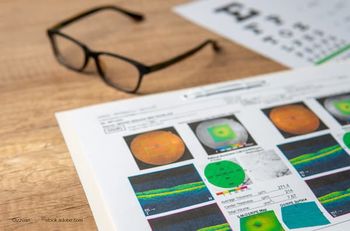
Once the model is trained, it can be applied to patients with the same disease, by just a quick OCT scan and then estimate the retinal sensitivity at each location of the en face OCT scan. The precision is in the range of the test-retest variability of actual MP testing.
In the data I [presented], we have not included visual acuity, dark adaptation, or other functional tests. This could be done in future studies.
How might AI-predicted retinal function complement or potentially replace current functional testing in GA, particularly in clinical trials or routine practice?
Schmitz-Valckenberg: AI opens the door for a precise and fast assessment of functional deficits, including longitudinally, without the need for cumbersome functional testing. I see numerous applications both in clinical trial research and routine practice, potentially allowing us to rapidly and reliably assess the functional impact of GA and therapeutic interventions like pegcetacoplan [injection] (SYFOVRE; Apellis Pharmaceuticals, Inc).
It is important to remember that AI models should only be applied in patients with disease features that have been initially used to train algorithms. For example, the AI model I presented [at Angiogenesis 2026] has been specifically developed for GA secondary to AMD. It would not be applicable to other retinal diseases or even other stages of AMD, such as exudative AMD.
One must also be careful to apply it to any new therapeutic intervention as the intervention itself may trigger structural changes that may cause interference with the AI model.
What validation strategies were used to ensure the model’s robustness across imaging devices, centers, and patient populations, and how does performance vary across disease stages?
Schmitz-Valckenberg: The AI model has been trained on fellow eyes of a well-defined, multicenter phase 3 trial in GA, the OAKS trial (NCT03525613). It has been then tested in study eyes of the OAKS trial and applied to 3 additional large, multicenter trials: DERBY (NCT03525600); GALE (NCT04770545); and FILLY (NCT02503332).
Finally, the model performance has been also tested and confirmed with an independent data set, the Directional Spread in Geographic Atrophy study (NCT02051998), that included detailed microperimetry testing in addition to imaging.
Do you see AI-based functional prediction being used as a surrogate endpoint in GA clinical trials, and what regulatory or clinical evidence would be needed to support this role?
Schmitz-Valckenberg: For ongoing clinical study, AI-based functional prediction has great potential. As mentioned above, one important aspect is that any new intervention may interfere with the algorithms.
Therefore, from a scientific perspective, you would likely need at least a subset of study subjects that undergo detailed testing and imaging to confirm the model performance of the AI algorithms or to adjust them. Then, it could be applied to the larger cohort.
Steffen Schmitz-Valckenberg, MD
E: steffen.valckenberg@hsc.utah.edu
Schmitz-Valckenberg is professor of ophthalmology and visual science and the Jon M. Huntsman Presidential Chair at John A. Moran Eye Center at the University of Utah in Salt Lake City, UT.
Reference
Schmitz-Valckenberg S. AI-powered prediction of retinal function by OCT imaging in geographic atrophy. Presented at: Angiogenesis, Exudation, and Degeneration 2026; February 7, 2026.
https://umiamihealth.org/bascom-palmer-eye-institute/healthcare-professionals/continuing-medical-education/angiogenesis/program
Advertisement
Related Content
Advertisement



Latest CME
















Advertisement
Advertisement