

Commentary|Articles|December 8, 2025
Q&A: Veeral Sheth, MD, MBA, on personalized, imaging-centered geographic atrophy care
Geographic atrophy management evolves with proactive imaging, personalized therapies, and real-world insights, enhancing patient care and treatment outcomes.
Advertisement
Over time, the introduction of new therapies for geographic atrophy (GA) has begun to reshape the standard of care and the approach to clinical monitoring and patient selection, and has sped up the evolution of long-term management. No longer confined to passive observation, GA care now centers on proactive measurement, risk stratification, and informed conversations around disease-modifying therapy.
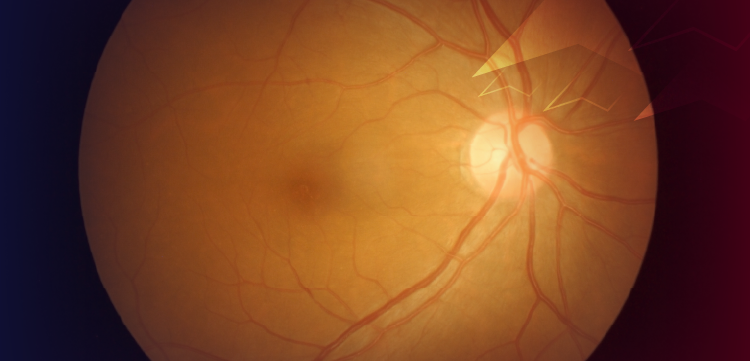
In particular, multimodal imaging—including optical coherence tomography (OCT) and fundus autofluorescence—has become indispensable for identifying high-risk phenotypes and quantifying lesion growth over time. Meanwhile, the clinical community continues to gather valuable real-world evidence on the performance of complement inhibition therapies, particularly in patient subgroups with subfoveal threat or preserved visual function.
These insights are informing nuanced treatment decisions that balance long-term anatomical preservation with functional goals and patient expectations. Simultaneously, clinicians are confronting practical questions around exudative risk management, the sequencing of anti-VEGF and GA-directed therapies, and patient education on realistic outcomes.
In a conversation with Modern Retina, one such clinician—Veeral Sheth, MD, MBA, FACS, FASRS, a partner at University Retina and clinical assistant professor at the University of Illinois at Chicago—shared a detailed look at how he is incorporating these real-world insights into everyday practice.
The following conversation has been lightly edited for clarity.
Modern Retina: With the increasing emphasis on early detection and longitudinal monitoring of geographic atrophy, how has your approach evolved regarding the use of multimodal imaging, particularly in quantifying lesion growth and identifying high-risk phenotypes?
Veeral Sheth, MD, MBA: My approach to GA has become increasingly imaging-centric. Multimodal imaging isn’t just helpful anymore—it’s foundational. OCT and fundus autofluorescence allow us to quantify lesion growth in a reproducible way and identify high-risk phenotypes long before they become clinically obvious. What’s changed most is the structure and consistency of follow-up. We’re no longer “watching” GA—we’re measuring it, trending it, and using those data points to inform discussions around risk, progression, and when to initiate treatment.
Modern Retina: Now that we have several years of real-world experience with complement inhibitors for geographic atrophy, how are you interpreting the clinical meaningfulness of slowing lesion growth in practice, and what factors guide which patients you initiate therapy for?
Veeral Sheth, MD, MBA: Real-world experience has reinforced what we saw in the trials: Slowing lesion growth is meaningful, especially when the fovea is at risk. The cumulative effect over the years is where the benefit truly becomes apparent. For me, treatment decisions come down to 3 factors:
- Anatomy: Is the fovea threatened?
- Functional reserve: How much vision is left to protect?
- Expectations: Does the patient understand the goal is to slow, not reverse, progression?
Framing treatment as a long-term investment resonates with patients and sets the right tone.
Modern Retina: Development of macular neovascularization (MNV) during complement inhibition continues to be an important topic at recent scientific meetings. How are you assessing and managing that risk, and what protocols have you built for monitoring or treating exudation without disrupting therapy?
Veeral Sheth, MD, MBA: I tell my patients that we take the risk of exudation seriously, but it’s manageable. If a patient does convert to MNV, we typically take 1 of 2 paths forward. The first option is to continue their GA therapy and treat the neovascular component in parallel. Patients can do well with this dual-pathway approach, and it allows us to stay committed to long-term GA preservation without interruption. The second option is to shift the treatment focus toward nAMD [neovascular age-related macular degeneration] management alone. This can reduce visit burden and simplify their regimen, with the understanding that we can always resume GA therapy down the road once the neovascular process stabilizes. With both options, the key is setting expectations early. Exudation doesn’t represent treatment failure—it’s part of the underlying disease biology—and patients appreciate having a tailored, flexible plan when this situation arises.
READ MORE >> Prevent Blindness delegates first week of December as 5th annual geographic atrophy week
Modern Retina: As new mechanisms of action—such as alternative complement pathway inhibitors, gene-based approaches, and regenerative/retinal pigment epithelium (RPE)–cell strategies—advance through clinical trials, how do you envision GA treatment algorithms evolving over the next 2 to 3 years?
Veeral Sheth, MD, MBA: Over the next 2 to 5 years, I expect GA management to become more individualized and mechanism-specific. We’ll likely see the following:
- Alternative complement pathway inhibitors offering new dosing or safety profiles
- Gene-based approaches providing longer-acting therapy
- Regenerative and RPE-cell strategies shifting the paradigm for certain subgroups
Much like neovascular AMD, GA care is moving toward a multimodal, personalized approach.
Modern Retina: Given that therapies for geographic atrophy slow rather than reverse atrophy, what strategies have you found most effective when counseling patients on expected outcomes, visit frequency, and long-term disease trajectory?
Veeral Sheth, MD, MBA: Clear, up-front counseling is essential. I tell patients we’re “slowing the clock, not turning it backward,” and they appreciate the honesty. We frame treatment as preserving functional vision for as long as possible, and we establish predictable follow-up patterns with regular imaging.
When expectations are realistic and the rationale is clear, adherence becomes significantly easier.
Modern Retina: Several presentations from the past 2 years highlighted artificial intelligence models capable of predicting future atrophy progression and functional decline. How close are these tools to influencing your clinical workflow, and what unmet needs remain for decision support in disease management?
Veeral Sheth, MD, MBA: AI is closer to influencing everyday practice than many realize. Predictive models using multimodal imaging are giving us new ways to quantify risk and anticipate decline before it’s clinically evident. The biggest unmet need now is seamless integration. We don’t need more stand-alone tools—we need systems that plug directly into existing workflows and deliver real-time insights at the point of care. When that happens, AI will truly change GA management.
Advertisement
Related Content
Advertisement




Latest CME













Advertisement
Advertisement
Trending on Modern Retina
1
Altered ipRGC circuits and function may translate to disrupted sleep and circadian rhythms in Alzheimer’s disease
2
Eichenbaum Acorns: From clinic to C-suite with Jay S. Duker, MD, and Ramiro Ribeiro, MD, PhD
3
CTS 2026: OTX-TKI demonstrates superiority over aflibercept in wet AMD—what the SOL-1 data mean for retina practice
4
Ranluspec FDA approval: Cyrus Karkaria, PhD, on biosimilar access, prefilled syringes, and long-term switching confidence
5