
Commentary|Videos|May 31, 2026
Retina World Congress 2026: Dry AMD — Geographic atrophy, photobiomodulation, and the road ahead
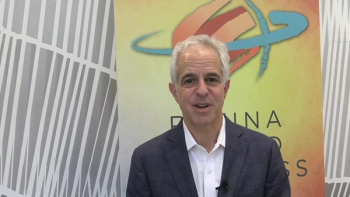
Dimitra Skondra, MD, PhD, FASRS, shares her perspective on the evolving treatment landscape for dry age-related macular degeneration and the key questions facing the field.
Advertisement
The treatment landscape for dry
Skondra highlighted the goals of the panel discussion, which she described as an opportunity to bring attention to different aspects of
Structure, function, and the unmet need in GA
On the 2 FDA-approved treatments for GA, Skondra noted that real-world uptake is picking up over time as more data emerge and clinicians become more comfortable using these medications. However she identified the correlation between structure and function as a key unmet need. "On the pictures, these patients seem to progress less, but are they really seeing better compared [with] those that don't get the treatment a few years down the line?" she said, adding that more functional data will be needed to drive broader adoption. She added that "we need to make sure our patients see better, and we're treating patients and not pictures."
She also pointed to the need for better end points beyond visual acuity, including contrast sensitivity and other biomarkers that can capture functional benefit more sensitively, and called for greater investment in understanding the risk for progression to advanced stages so that intervention can happen earlier.
On emerging approaches, Skondra identified lifestyle and diet as potentially more protective than any drug currently in the pipeline or already available, citing clinical data from randomized trials and preclinical evidence strongly associating diet with AMD progression.
Regarding photobiomodulation, she noted that objective data beyond visual acuity—including drusen volume and other progression biomarkers—suggest a protective effect for advancing to advanced stages, and that longer-term data will help clarify which patients are best suited for this approach. On gene therapy, she expressed excitement about its potential to reduce treatment burden while acknowledging that the field still needs to determine which genes are best suited for therapeutic intervention.
Skondra also highlighted gut microbiome research and AI as areas she believes are not receiving enough attention, arguing that systemic factors including diet, lifestyle, and antibiotic exposure need to be incorporated into prediction algorithms and treatment response models. "The eye is not alone, but the eye is part of the body," she said. "Unless we put this all together, we'll not be able to really move the field."
Advertisement
Related Content
Advertisement




Latest CME














Advertisement
Advertisement
Trending on Modern Retina
1
Retina World Congress 2026: Expanding the DME treatment algorithm beyond anti-VEGF
2
Retina World Congress 2026: Port Delivery System shows durable outcomes at 7 years in neovascular AMD
3
MacTel masquerades: How to spot what others miss
4
Q&A: Using natural images for the evaluation of distance image quality in IOLs
5