
Commentary|Videos|May 23, 2026
Retina World Congress 2026: EYP-1901 phase 2 updates for wet AMD and DME
Author(s)Ashkan Abbey, MD, Sheryl Stevenson
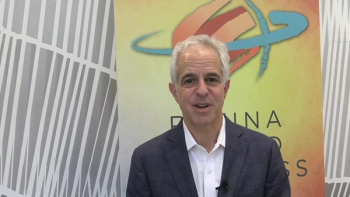
Ashkan Abbey, MD, reviews findings from the DAVIO2 and VERONA clinical trials for the bioerodible intravitreal insert.
Advertisement
As interest in sustained delivery continues to grow across the retinal disease landscape, EYP-1901 is emerging as a promising option for patients with wet
Abbey described the mechanism behind the bioerodible design of EYP-1901, explaining that following injection the insert provides sustained release of a tyrosine kinase inhibitor over roughly 6 to 9 months. He noted that the multifactorial mechanism suppresses VEGF receptors and PDGF receptors while also suppressing inflammation through the JAK1 pathway with IL-6, and that combining EYP-1901 with bolus anti-VEGF injections could provide "a multiple treatment modality that can probably get us our most durable and effective outcomes for our patients."
Abbey reviewed data from two phase 2 trials. In the DAVIO2 (NCT05381948) trial for wet AMD, previously treated patients received either a low or high dose of EYP-1901 following three bolus injections of aflibercept, or aflibercept alone every other month. Patients who received EYP-1901 demonstrated an over 80% reduction in treatment burden compared with the number of injections they had received in the prior year. Abbey noted that these were high treatment burden patients coming in, averaging almost 10 injections in the previous year, and that roughly two-thirds of patients in the trial were supplemental injection free over the course of the year.
VERONA trial: DME findings
In the VERONA (NCT06099184) trial for DME, previously treated patients were randomly selected to receive low or high dose EYP-1901 with aflibercept on day one, or aflibercept alone. The primary end point was met, with the time to first supplemental injection extended in the EYP-1901 group. Approximately 73% of patients in the EYP-1901 group were supplemental injection free at trial end, compared with 50% in the aflibercept group.
On safety, Abbey reported that across approximately 190 patients who have received EYP-1901, there have been no drug-related ocular or systemic serious adverse events, no cases of anterior chamber migration, no anterior chamber opacities, and no reports of occlusive vasculitis. "Overall, the picture for safety so far has been quite good," he said.
Regarding patient selection, Abbey indicated that in the wet AMD space he sees the greatest benefit for patients who are well controlled but cannot be extended past 6 to 8 weeks of dosing. "Any little thing that'll allow us to reduce the burden on our staff, on our patients, on the physicians themselves, I think is going to be a major win for the retina community," he said.
Advertisement
Related Content
Advertisement




Latest CME



















Advertisement
Advertisement
Trending on Modern Retina
1
Q&A: Using natural images for the evaluation of distance image quality in IOLs
2
Retina World Congress 2026: Expanding the DME treatment algorithm beyond anti-VEGF
3
Retina World Congress 2026: RVO as a window into systemic vascular health
4
UveAI: Automated fluorescein angiography scoring for retinal inflammation in uveitis
5