

Commentary|Videos|February 23, 2026
The Retina TL;DR with Dr. Weng: Tracking retinal gene therapies with Arshad M. Khanani, MD, MA, FASRS
Fact checked by: Sheryl Stevenson
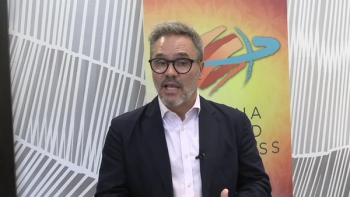
In the latest episode of The Retina TL;DR, host Christina Y. Weng, MD, MBA, FASRS, talks with Dr. Khanani about new retinal gene therapy trials, covering safety, delivery, and ways to reduce treatment burden.
Advertisement
Like what you just watched? The goal of The Retina TL;DR with Dr. Weng video series, hosted by Christina Y. Weng, MD, MBA, FASRS, is to provide fast-paced, high-level information for today’s modern retina specialist. We’d love to hear your feedback. Email us at eyecarenetwork@mjhlifesciences.com
In this episode of The Retina TL;DR, powered by Modern Retina, host Christina Y. Weng, MD, MBA, FASRS, professor and the Alice R. McPherson Retina Research Foundation Chair in Ophthalmology at Baylor College of Medicine in Houston, Texas, welcomes Arshad M. Khanani, MD, MA, FASRS, to discuss emerging gene therapies for retinal diseases and their potential to reduce treatment burden.
Khanani is managing partner, director of clinical research, and director of fellowship at Sierra Eye Associates, and clinical professor at the University of Nevada, Reno School of Medicine. He is also a leading clinical trialist in retinal therapeutics.
When asked to summarize his take on retinal gene therapy in a “TL;DR” (“too long; didn’t read”), Khanani said, “Gene therapy is here to stay. It’s likely to be approved in the next few years and will meaningfully change outcomes for patients with retinal disease.” While already transformative for orphan diseases like biallelic RPE65 deficiency, gene therapy for common retinal conditions such as neovascular age-related macular degeneration (AMD) and diabetic macular edema may improve long-term outcomes by maintaining stable disease control and reducing central subfield thickness fluctuations over time.
Reducing treatment burden
Current anti-VEGF therapies are effective in the short term, but real-world data show declining visual acuity over time. Khanani highlighted that sustained gene delivery may allow patients to experience fewer injections and more consistent disease management, preserving independence and quality of life. “My hope is that with gene therapy, with sustained delivery, we’ll be able to control disease at a steady state for a long time, which will lead to better long-term outcomes than what we are seeing,” he said.
Noteworthy clinical trials
Khanani discussed key clinical trials including ABBV-RGX-314, Ixo-vec, and 4D-150.1-3 He emphasized that the first therapy to market—likely ABBV-RGX-314—will influence physician adoption and set expectations for subsequent programs. Delivery routes vary: subretinal, intravitreal, and suprachoroidal, each with unique safety and logistical considerations. (Note: 4D Molecular Therapeutics just announced the completion of patient enrollment for its phase 3 4D-150 trial in wet AMD ahead of schedule, with results expected in 2027.3)
Safety considerations
Balancing efficacy and safety is critical. Khanani noted potential adverse events such as inflammation, hypotony, or pigmentary changes, which vary by dose and delivery route. Intravitreal therapies require steroid prophylaxis to reduce immune reactions. He explained, “With power comes responsibility. Gene therapy can really control the disease, but we have to be careful with the dosing.” Data from the Port Delivery System and ABBV-RGX-314 programs indicate no increase in macular atrophy or other long-term adverse events, suggesting sustained VEGF suppression can be safe.1,4
Future integration into clinical practice
Gene therapy will initially target high-burden patients needing frequent injections and may expand to broader populations as long-term safety and efficacy are confirmed. Khanani emphasized that gene therapy functions as a drug-delivery platform rather than a “cure,” aiming to reduce treatment burden and stabilize vision.
Additional resources
Khanani recommended review articles and connections with experts actively involved in retinal gene therapy trials for further learning and updates on emerging sustained delivery approaches.
- Khanani AM, Aziz AA, Khanani ZA, et al. Subretinal gene therapy for treatment of retinal and choroidal vascular diseases. Am J Ophthalmol. 2025;277:512-517. doi:10.1016/j.ajo.2024.12.002
- Khanani AM, Thomas MJ, Aziz AA, et al. Review of gene therapies for age-related macular degeneration. Eye (Lond). 2022;36(2):303-311. doi:10.1038/s41433-021-01842-1
Christina Y. Weng, MD, MBA, FASRS, is professor and the Alice R. McPherson Retina Research Foundation Chair in Ophthalmology, and fellowship program director, vitreoretinal diseases and surgery with Baylor College of Medicine in Houston, Texas. Weng is a consultant for AbbVie/Allergan, Frontera Therapeutics, and REGENXBIO.
Arshad M. Khanani, MD, MA, FASRS, is managing partner, director of clinical research, and director of fellowship at Sierra Eye Associates, and clinical professor at the University of Nevada, Reno School of Medicine, both in Reno, Nevada. Khanani is a consultant and investigator for 4D Molecular Therapeutics, Adverum Biotechnologies, and REGENXBIO.
REFERENCES
REGENXBIO highlights key 2026 catalysts and announces positive long-term functional outcomes in lead Duchenne gene therapy program. News release. January 11, 2026. Accessed February 16, 2026.
https://ir.regenxbio.com/news-releases/news-release-details/regenxbio-highlights-key-2026-catalysts-and-announces-positive Lilly to acquire Adverum Biotechnologies. News release. October 24, 2025. Accessed February 16, 2026.
https://lilly.gcs-web.com/news-releases/news-release-details/lilly-acquire-adverum-biotechnologies 4DMT completes enrollment for 4FRONT-1 phase 3 clinical trial of 4D-150 in wet AMD. News release. February 9, 2026. Accessed February 16, 2026.
https://ir.4dmoleculartherapeutics.com/news-releases/news-release-details/4dmt-completes-enrollment-4front-1-phase-3-clinical-trial-4d-150 Genentech’s Susvimo maintains vision over five years with two refills per year in people with wet age-related macular degeneration (AMD). News release. August 1, 2025. Accessed February 16, 2026.
https://www.businesswire.com/news/home/20250801344271/en/Genentechs-Susvimo-Maintains-Vision-Over-Five-Years-With-Two-Refills-Per-Year-in-People-With-Wet-Age-Related-Macular-Degeneration-AMD
Advertisement
Related Content
Advertisement



Latest CME

















Advertisement
Advertisement