Videos

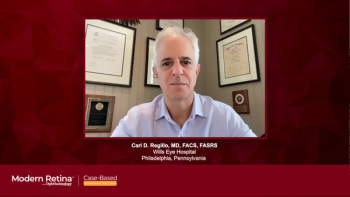
Video 3 - "Managing a Patient with Bilateral Geographic Atrophy"

Carl D. Regillo, MD, FACS, FASRS presents a case study of a patient with bilateral geographic atrophy, discussing the decision-making process for determining which eye to treat first, considering factors such as the extent of atrophy and vision in each eye.


Video 2 - "FDA-approved Therapies for Geographic Atrophy"

An expert retina specialist discusses the recent FDA-approved treatments for geographic atrophy (GA) that slow disease progression and highlights key factors to consider before starting treatment.

Experts discusses concerns related to the use of new agents, focusing on intraocular inflammation (IOI) and potential batch variations in biologics faricimab and aflibercept. He emphasizes close monitoring for IOI and advises clinicians to scrutinize patients for any signs of inflammation during follow-up visits.

Experts discuss the use of steroids, particularly in the context of diabetic macular edema (DME). The inflammatory nature of DME reveals the effectiveness of steroids, especially in cases where persistent fluid remains despite anti-VEGF treatment.

Judy Kim, MD and Peter Kaiser, MD discuss the use of biosimilars and the potential introduction of biosimilar aflibercept for treating retinal diseases. Experts discuss their preferences for specific drugs and highlight the evolving landscape, anticipating challenges in drug selection and emphasizing the need for collaboration between retinal specialists and insurance companies to optimize patient care.

In this insightful discussion on changing therapeutic approaches in neovascular age-related macular degeneration (nAMD) and diabetic macular edema (DME), Judy Kim, MD and Peter Kaiser, MD address barriers like step therapy and the impact of insurance-guided choices on treatment outcomes. The conversation emphasizes the need for a personalized approach, citing clinical trial data while acknowledging the challenges of aligning real-world practices with stringent trial protocols.