
Publication|Articles|December 26, 2025
- Modern Retina November and December 2025
- Volume 5
- Issue 4
A medical fellow finds some magic at the AAO Annual Meeting
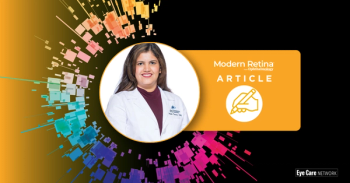
Author(s)Iden Amiri, MD
The value of attending industry meetings at the beginning of a career in ophthalmology.
Advertisement
Attending the American Academy of Ophthalmology (AAO) Annual Meeting for the first time can feel overwhelming. With thousands of attendees, an endless lineup of sessions, and an exhibit hall large enough to get lost in, it’s easy to feel small in such a vast sea of expertise. Yet from the moment I arrived, I was welcomed with open arms. AAO was a glimpse into the professional family I hope to join soon.
Finding my community in the Young Ophthalmologist Lounge
My first stop was the Young Ophthalmologist (YO) Lounge, a dedicated space for medical students, residents, and newly graduated attendings. It quickly became my home base throughout the weekend. The energy was warm and collaborative, and I met so many people in various stages of training who were eager to share advice. The YO lounge offered sessions on mentorship, practice management, and navigating early career challenges, but what I appreciated most was the chance to connect informally, such as grabbing coffee with residents, chatting with fellows about research, and meeting faculty who had just completed their residency.
The YO mixers were some of the highlights of my weekend. They made it incredibly easy to meet others my age, including students from around the country who were also in the middle of the match process. One of the most memorable events was the Subspecialty Dating Game, a lighthearted way to learn about each subspecialty through fun, fast-paced “matchmaking” conversations with experts. It reminded me that even in a field as advanced and technical as ophthalmology, there’s still room for humor and humanity.
Representation and belonging at the Lavender Lounge
Equally meaningful was spending time in the Lavender Lounge, a new space dedicated to the lesbian, gay, bisexual, transgender, queer–plus ophthalmology community. This was the first year the group had an official lounge, situated next to the YO Lounge, and the sense of belonging it created was palpable. It was inspiring to see ophthalmology actively making room for diversity and inclusion, not just in words but in actions.
One of the most powerful moments for me was meeting a mentor, Michael Puente Jr, MD, an associate professor of ophthalmology at the University of Colorado School of Medicine. He received the Artemis Award for his work changing regulations around corneal donation by gay men. Hearing him share his story in person was emotional and empowering. The Lavender Lounge also hosted a medical student networking hour that gave me the chance to meet other students and physicians who are passionate about advocacy and representation. The conversations were open, genuine, and deeply motivating, reaffirming how important it is for young ophthalmologists to feel seen in every sense of the word.
A different kind of research experience
I attended AAO to present my on-demand poster, which was a unique experience compared with traditional conferences. Instead of a single poster hall, the AAO exhibit area featured large screens where attendees could search for and view digital posters throughout the day. Although it was less conducive to spontaneous discussions with authors, it was an innovative and efficient way to share research. I enjoyed exploring the clinical and translational work being presented, everything from innovations in glaucoma surgery to the use of artificial intelligence in diagnostics.
Having previously attended the Association for Research in Vision and Ophthalmology Annual Meeting, which leaned heavily toward basic science, I found AAO’s focus refreshingly clinical and practice oriented. For a medical student, it was invaluable to see how research directly shapes patient care. Each presentation I watched, each conversation I had, helped me better understand the real-world impact of innovation in ophthalmology.
Technology, learning, and a little bit of magic
The exhibit hall was its own world, buzzing with technology, demonstrations, and excitement. I spent hours exploring new surgical instruments, imaging systems, and emerging medical devices.
Ophthalmology is such a technologically driven specialty, and it was thrilling to see firsthand how rapidly the field is evolving. One booth even featured a small petting zoo, a reminder that despite the seriousness of medicine, there’s always room for playfulness and curiosity.
Outside of the structured programming, there were numerous after-hours events that made networking feel effortless. The Real World Ophthalmology gathering and the Young Ophthalmologist events offered relaxed environments where I met residents, faculty, and program directors.
These informal interactions often led to some of the most insightful conversations about training, career paths, and what makes different residency programs unique.
AAO also hosted subspecialty days, where participants could take a deeper dive into specific areas such as retina, cornea, or oculoplastics. Although I didn’t attend, I appreciated that these sessions offered another avenue to connect with leaders in the field. Even just standing outside the auditoriums between sessions provided opportunities to meet inspiring people whose work I had read about.
The weekend concluded with one of the most unforgettable experiences: AAO rented out the entire Wizarding World of Harry Potter at Universal Studios Orlando Resort. Spending the evening surrounded by ophthalmologists from around the world, wand in one hand, butterbeer in the other, was surreal. It was an unforgettable night for the ophthalmology community, a chance to share a little magic beyond the conference halls.
Reflections and advice for future attendees
Looking back, attending AAO as a medical student was transformative. It gave me the chance to see where I hope to be in a few years, to meet the people shaping the future of vision care, and to feel part of something much larger than myself. It reaffirmed my decision to pursue ophthalmology and reminded me why I fell in love with the field in the first place: the combination of precision, innovation, and compassion.
For future medical students considering attending, my advice is simple: Go. Even if it feels intimidating, you’ll find community everywhere you turn. Visit the YO Lounge, stop by the Lavender Lounge, strike up conversations in the exhibit hall, and don’t be afraid to introduce yourself to people whose work you admire.
You’ll walk away not only with new knowledge but also new friends, mentors, and memories that will last far beyond the weekend.
Iden Amiri, MD
Amiri is a research fellow at the University of North Carolina at Chapel Hill Department of Ophthalmology. His research interests include glaucoma, oculoplastics, and the integration of artificial intelligence into ophthalmic care.
Financial Disclosures: none
Articles in this issue
Advertisement
Related Content
Advertisement
Latest CME











Advertisement
Advertisement