
Commentary|Articles|January 15, 2026
Q&A: Evolving approaches to geographic atrophy management
Author(s)David S. Boyer, MD, Matt Hoffman
Fact checked by: Sheryl Stevenson
David S. Boyer, MD, outlines changes in GA evaluation, the role of complement inhibition, monitoring for neovascular conversion, and emerging therapies.
Advertisement
Management of
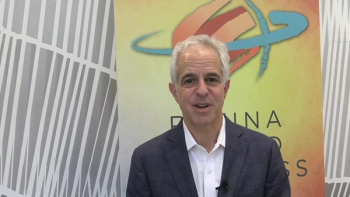
In this Q&A conversation, the Eye Care Network spoke with David S. Boyer, MD, about how his approach to GA has evolved, including the role of multimodal imaging, interpretation of clinical trial and real-world data, management of treatment-related risks, and expectations for future therapeutic options. Boyer is senior partner with Retina-Vitreous Associates Medical Group in Beverly Hills, California.
Note: Transcript edited lightly for clarity and length.
With the increasing emphasis on early detection and longitudinal monitoring of GA, how has your approach evolved regarding the use of multimodal imaging, particularly in quantifying lesion growth and identifying high-risk phenotypes?
David S. Boyer, MD: Prior to the approval of complement inhibitors for GA, my work-up would include optical coherence tomography (OCT) to rule a small area of leakage.
Now, I add autofluorescence to get a baseline and with Optos I am able to measure the lesions for growth.
Prior to instituting treatment, I have added optical coherence tomography angiography (OCTA) to rule out nonexudative choroidal neovascularization (CNV).
Now that we have several years of real-world experience with complement inhibitors for GA, how are you interpreting the clinical meaningfulness of slowing lesion growth in practice, and what factors guide which patients you initiate therapy for?
Boyer: The complement inhibitors do slow growth, but the patients that I think should be treated are minimally symptomatic. The patients have to understand the goal of treatment and that their vision will not improve, but stability in this setting is good. The patients have to buy-in to the treatment.
Development of macular neovascularization during complement inhibition continues to be an important topic at recent scientific meetings. How are you assessing and managing that risk, and what protocols have you built for monitoring or treating exudation without disrupting therapy?
Boyer: I have relied on OCTA to pick up subclinical cases of CNV. I also look for a double-layer sign and advise the patients that their risk for conversion is high. I do not think all leakage is CNV; some I believe may be exudative and some will go away with continued [monitoring or treatment].
As new mechanisms of action—such as alternative complement pathway inhibitors, gene-based approaches, and regenerative/retinal pigment epithelium-cell strategies—advance through clinical trials, how do you envision GA treatment algorithms evolving over the next 2 to 3 years?
Boyer: At this time, we are awaiting the results from several trials. Except for the results from C1q inhibition, all other treatments are 4 to 6 years away.
Given that therapies for GA slow rather than reverse atrophy, what strategies have you found most effective when counseling patients on expected outcomes, visit frequency, and long-term disease trajectory?
Boyer: Patients need to be aware that this is an ongoing disease which we cannot stop. Our goal is to improve their functional vision as long as we can. Do not forget low vision when patients are having more problems doing their daily tasks. I am hoping some of the stem cell treatments done early can improve or stabilize vision. One of the stem cell treatments demonstrated 7 letter improvement at 3 years.
Several presentations from the past 2 years highlighted artificial intelligence (AI) models capable of predicting future atrophy progression and functional decline. How close are these tools to influencing your clinical workflow, and what unmet needs remain for decision-support in disease management?
Boyer: AI will become an additional tool to see who the rapid progressors are, who is not responding to treatment, and who is. AI will read the OCT's and see the extent of photoreceptor loss compared [with] the autofluorescence defect.
David S. Boyer, MD
E: vitdoc@aol.com
Boyer is senior partner with Retina-Vitreous Associates Medical Group in Beverly Hills, California.
Advertisement
Related Content
Advertisement




Latest CME



















Advertisement
Advertisement
Trending on Modern Retina
1
Retina World Congress 2026: Expanding the DME treatment algorithm beyond anti-VEGF
2
Retina World Congress 2026: Port Delivery System shows durable outcomes at 7 years in neovascular AMD
3
MacTel masquerades: How to spot what others miss
4
Q&A: Using natural images for the evaluation of distance image quality in IOLs
5