

Martin David Harp
Advertisement
Articles by Martin David Harp

Sandoz will oversee commercialization of the product across the European Union (excluding Germany), Switzerland, Norway, Australia, Hong Kong, Vietnam, and Malaysia under the terms of the agreement.



The agreement is for a planned clinical trial of AXPAXLI (also known as OTX-TKI) for the treatment of non-proliferative diabetic retinopathy (NPDR).



Franklin shares how methotrexate significantly reduces reoperation rates in diabetic patients with retinal detachments, enhancing postoperative outcomes and vision.

4D Molecular Therapeutics showcases promising SPECTRA trial results for 4D-150, highlighting its potential to revolutionize diabetic macular edema treatment.

The DAVIO-2 study reveals EYP-1901's potential as a 6-month treatment for neovascular AMD, matching aflibercept's vision outcomes with fewer doses.
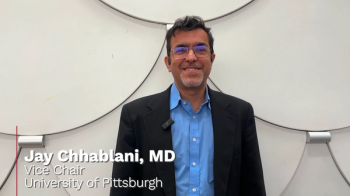
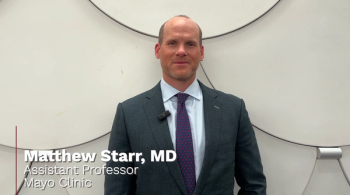
Matthew Starr, MD, discusses techniques for correcting astigmatism in patients lacking capsular support, enhancing visual outcomes surgery.

Lai spoke with Modern Retina about the study of PER-001, a novel therapeutic targeting the endothelin-1 receptor.



Christina Weng, MD, MBA, FASRS, explores the viability of postoperative day 0 exams as a substitute for day 1 after vitreoretinal surgery, revealing promising findings.

Andrew G. Lee, MD, shares essential insights on neuro-ophthalmology for retina specialists, emphasizing diagnosis techniques and collaboration with neuro-ops.

Dilsher S. Dhoot, MD, FASRS, shares insights on avoralstat, a promising treatment for diabetic macular edema, at ASRS 2025.

Notably, Alcon will be providing a demo of the UNIPEXY Gas Delivery System.

EYLUXV, a new biosimilar for treating serious eye conditions, gains positive EMA recommendation, promising improved patient access and outcomes.

Vonaprument has received fast track designation from the US Food and Drug Administration.

ANI Pharmaceuticals releases results for ILUVIEN in treating diabetic macular edema.

OpenAI's ChatGPT-4o enhances ophthalmological image generation, producing realistic retinal photographs while highlighting the need for further research in training datasets.

RetinalGeniX partners with Labcorp to enhance genetic testing and retinal imaging, aiming for early disease detection and improved patient care.

The VISTA trial is evaluating and comparing 2 dose levels of laru-zova with an untreated control group for the treatment of X-linked retinitis pigmentosa (XLRP).
LumiThera’s PBM is the only device that has demonstrated meaningful vision improvement compared to baseline for people living with early to intermediate dry AMD.

The study will be led by principal investigator professor Noemi Lois, MD, PhD, FRCS(Ed), FRCOphth, at Queen’s University Belfast, in over 20 clinical sites, and plans to enroll 264 patients across the UK with severe DME.

Patients express mixed feelings about AI in healthcare, favoring its use for documentation and administrative tasks while demanding transparency and safety standards.

The phase 2/3 clinical trial for OCU410ST will enroll 51 participants diagnosed with Stargardt disease.
Advertisement
Advertisement
Advertisement