Articles by Martin David Harp
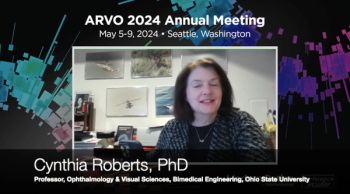
Cynthia Roberts, PhD, sat down to discuss a 5-year prospective study to compare ocular stiffness parameters in, diabetes with retinopathy, diabetes without retinopathy, and normal subjects at this year's ARVO meeting held in Seattle, Washington, from May 5 to May 9.
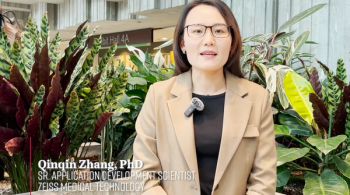
At this year's ARVO meeting, Qinqin Zhang, PhD, presented a poster titled "A unified deep learning model for geographic atrophy segmentation: Adaptable to SS-OCT and SD-OCT data with multiple scan patterns." At the conference she gave Ophthalmology Times an overview.
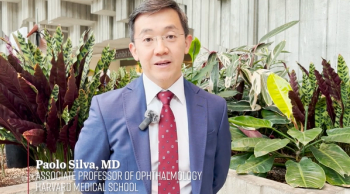
At this year's ARVO meeting, Paolo Silva, MD, presented data on Protocol AA on behalf of the DRCR Retina Network and the effect of diabetic retinopathy lesion location and severity on the risk for progression in the long term.

At this year's ARVO meeting, Ash Abbey, MD, Director of clinical research at Texas Retina Associates, presented 36-month data from the GALE study of pegcetacoplan for the treatment of dry age-related macular degeneration specifically geographic atrophy.

Kamuvudine-8, also known as K8, is administered to the back of the eye via a sustained released intravitreal implant.


The collaboration will bring automated, AI-powered OCT segmentation to MICRON Software Suite.

The 2 organizations to receive initial gifts will be Sight for Life and Eye Corps.

Stargardt disease is the most common inherited retinal dystrophy (causing blurring or loss of central vision) in both adults and children.

The new cohort will add patients living with IRDs caused by mutations in multiple genes to the already existing cohort of patients with IRDs caused by single gene mutations.

The Phase 2 trial tested whether inhibiting microglia with minocycline might help slow GA expansion and its corresponding vision loss.
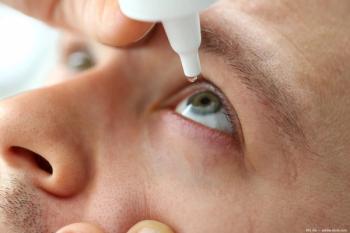
The trial evaluated nesvategrast (OTT166 5%) eye drops in patients with diabetic retinopathy.

Results show Eylea HD extended dosing regimens were non-inferior to aflibercept 2 mg injection (Eylea) for both the treatment of wet age-related macular degeneration (wAMD) and diabetic macular edema (DME).

The supplement is specifically crafted to promote healthy intraocular pressure (IOP), nurturing the well-being of retinal ganglion cells, and sustain the health of the retinal nerve fiber layer while boosting memory and concentration.
Anthony Mai, MD, shared results from using the miCOR 700 device, which is a new device from Zeiss, for phacoemulsification cataract surgery at the EnVision Summit 2024. He spoke with Peg Achenbach, OD, FAAO, Executive Director/Global Ambassador Strategies, Ophthalmology and Optometry at MJH Life sciences, on location in Puerto Rico to share more about his presentation.

Products under the terms of the agreement include VERKAZIA, Cationorm PLUS, VEVYE, IHEEZO, and ZERVIATE.

The event, being held at the El Conquistador Resort in Puerto Rico, is offering programs for ophthalmologists and optometrists.
The trial will evaluate tivozanib eye drops (KHK4951), a small-molecule vascular endothelial growth factor receptor (VEGFR)-1, -2, and -3 tyrosine kinase inhibitor (TKI), in patients in with DME.
In conversation with Ophthalmology Times Europe, Anat Loewenstein, MD, illuminates the outcomes of using an AI-based fluid quantification for remote retina monitoring and analysis.

The app is a tool aimed at allowing patients to measure their visual acuity at home by themselves.

Kamuvudines are a new class of inflammasome inhibitor drugs as therapies for prevalent, degenerative diseases. The trial is evaluating SOM-401 (K8), a derivative of a nucleoside reverse transcriptase inhibitor.

The company announced more advancements of its RASP modulator platform, including plans for ADX-629 and ADX-246.

The study will evaluate the safety and efficacy of fluocinolone acetonide intravitreal implant 0.18mg, (YUTIQ) in the treatment of chronic non-infectious uveitis and related intraocular inflammation.

The revision is in response to multiple recalls for eye drops and instances of consumer injury and death in 2023.

A look back at some of the biggest stories in ophthalmology in 2023.

Ophthalmology witnessed a transformative year with 12 FDA approvals. As the year concludes, there remains a robust pipeline of drugs, setting high expectations for continued advancements in ophthalmological care in 2024 and beyond.

LambdaVision seeks to cure genetic blindness with a protein-based artificial retina. Harnessing microgravity in low-Earth orbit, the company collaborates with NASA and the ISS to perfect its manufacturing process.

The drug is being evaluated on its safety, tolerability and pharmacokinetics of intravitreal single-rising doses and multiple doses as a potential treatment for GA.

The company has come into agreement with IQVIA Services Japan G.K. as well as AUROLAB.

The ranibizumab biosimilar is a recombinant antigen-binding fragment (Fab).
