
The pandemic reshapes treatment intervals for neovascular AMD, revealing flexible strategies that maintain visual outcomes and enhance patient care.
The pandemic reshapes treatment intervals for neovascular AMD, revealing flexible strategies that maintain visual outcomes and enhance patient care.

The EU-ROP registry revolutionizes retinopathy of prematurity management, offering insights into treatment variations and outcomes across Europe.

Dr. Quan Dong Nguyen presents interim data from the phase 3 DRAGON study on a potential first therapy for adolescent Stargardt disease.

Explore the evolving challenges and insights in long-term follow-up for pediatric gene therapy, focusing on data integrity, ethical considerations, and patient retention.

Guest lecturer explores the emerging frontiers in ROP therapy and the evolving ethical, clinical, and technological considerations.
Choroidal dysfunction plays a crucial role in retinal diseases, highlighting its potential as a therapeutic target and the need for innovative treatments.
Dr. Sharon Fekrat presented a retrospective analysis assessing how antiplatelet and anticoagulant therapy relates to hemorrhage characteristics and outcomes.

Sharon Fekrat discusses the complexities of antithrombotic use in wet AMD, highlighting the need for individualized treatment and future guideline development.

Remote monitoring of age-related macular degeneration enhances patient care, reduces treatment burden, and leverages AI for personalized management.

Prof Dr Rajvardhan Azad explains how unified guidelines, AI-driven tools, and cross-disciplinary collaboration could transform outcomes for premature infants.
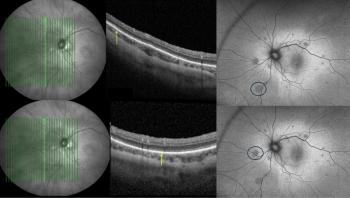
Priyanka Sanghi, BSc, MSc, MBBS, highlights how fundus autofluorescence and optical coherence tomography may help uncover long-term retinal footprints invisible to standard examination.

Innovative multimodal deep learning models enhance non-invasive chronic kidney disease screening by integrating retinal images and urine dipstick data for improved accuracy.

Dr. Melissa Yuan discusses the impact of weight and postmenstrual age on foveal maturation in preterm infants, highlighting critical insights for neonatal care.

The Portal extension trial reveals that the Port Delivery System significantly improves vision in AMD patients, showcasing long-term efficacy and durability.

New treatments show promise in preventing fibrosis in neovascular AMD, addressing a critical need for improved visual outcomes in patients.

Dr. J. Peter Campbell discusses the technologies shaping retinopathy of prematurity detection, clinical integration, and global implementation.

The two meetings will be held concurrently from December 4-7 in Florence, Italy.