
News|Articles|December 5, 2025
FLORetina 2025: Multimodal deep learning for CKD diagnosis using retinal images and urine dipstick data
Author(s)Lynda Charters
Innovative multimodal deep learning models enhance non-invasive chronic kidney disease screening by integrating retinal images and urine dipstick data for improved accuracy.
Advertisement
Chronic kidney disease (CKD), a highly prevalent disease worldwide, has the potential to be monitored noninvasively based on recent work done by South Korean investigators. Their method uses multimodal deep learning models that integrate retinal images and urine dipstick data, according to Joonhyung Kim, MD, PhD, who is an assistant professor in the Department of Ophthalmology, CHA Bundang Medical Center, South Korea. He reported his group’s findings at the FLOretina 2025 annual meeting, December 4-7, in Florence, Italy.
CKD is a major global public health burden with rising incidence and substantial socioeconomic impact. Because CKD often progresses silently until advanced stages, early detection is essential to prevent disease progression, cardiovascular complications, and irreversible renal failure. Although serum-based laboratory tests remain the diagnostic standard, they require blood sampling and healthcare access, making them less ideal for rapid community screening. Over the past decade, retinal imaging has gained attention as a potential non-invasive biomarker because the retinal microvasculature reflects systemic vascular and metabolic abnormalities linked to renal dysfunction. Deep learning models using retinal photographs have shown promise; however, their accuracy has been limited in detecting proteinuria and in certain demographic subgroups, particularly older adults, he explained.
To address these limitations, researchers developed and validated three models of the estimated glomerular filtration rate (e0GFR) using different types of data: a retinal image deep learning model (eGFR-RIDL), a logistic regression model using urine dipstick results (eGFR-UDLR), and a multimodal deep learning model combining retinal images with urine dipstick data (eGFR-MMDL). Each model was trained to predict an eGFR below 60 mL/min/1.73 m², which is a widely accepted threshold for diagnosing CKD. The eGFR was calculated using the CKD-EPI 2009 equation.
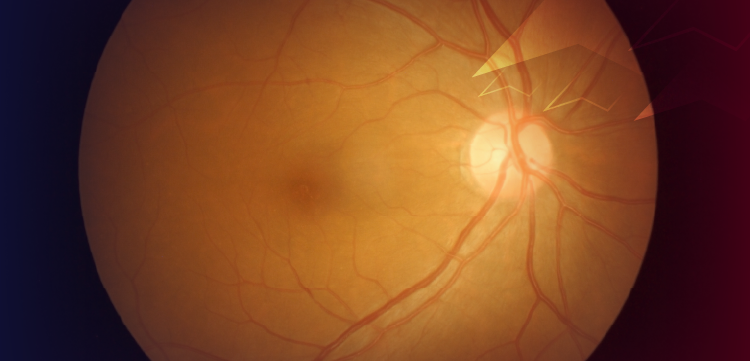
The study used a large multicenter cohort of adults aged 20 to 79 years, consisting of a development dataset of 65,082 participants and an external validation dataset of 58,284 participants. Wide residual networks were implemented for retinal image analysis, and saliency maps were applied to visualize regions contributing most to prediction. Sensitivity analyses were performed to evaluate the influence of numerical variables and to test model robustness across clinically relevant subgroups.
What did the analysis of the results reveal?
The results demonstrated that the multimodal eGFR-MMDL model significantly outperformed the retinal-only eGFR-RIDL model in both internal testing and external validation (area under the curves, 0.94 vs. 0.90; 0.88 vs. 0.77, P < 0.001). Although the urine-only eGFR-UDLR model exceeded the performance of the retinal-only model and approximated the multimodal model in overall metrics, only the eGFR-MMDL model showed consistently improved accuracy across all age groups, sexes, and risk categories. This finding supports that the improved diagnostic power is attributable to the integration of retinal imaging with urine data, rather than reliance on urine dipstick analysis alone, Dr. Kim reported.
Subgroup analyses, he explained further, highlighted two substantial modifiers of model performance: age and proteinuria. The multimodal model showed optimal predictive value among individuals younger than 65 years and those with proteinuria, suggesting that retinal features correlated more strongly with renal dysfunction in these populations. Conversely, performance diminished among adults aged 65 years or older, likely due to age-related retinal microvascular changes and increased comorbidities that reduce the specificity of ocular biomarkers.
Saliency visualization revealed that urine dipstick features were correlated with the retinal abnormalities, while retinal vascular structures, especially arcade vessels, play a key role in predicting kidney function.
In conclusion, multimodal deep learning incorporating retinal imaging and urine dipstick data presents a promising non-invasive strategy for CKD screening. Although it outperforms models based on retinal imaging alone, routine blood tests remain necessary for individuals aged 65 years and older due to reduced predictive reliability in this demographic.
Advertisement
Related Content
Advertisement




Latest CME













Advertisement
Advertisement