















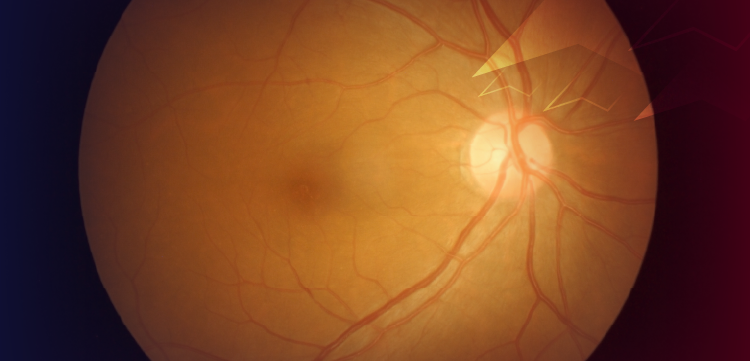







Sruthi Arepalli, MD, discusses the case of a patient with syphilis and sheds light on the complexities of diagnosing a masquerading syndrome.


Rare Disease Day: Ocugen completes dosing of subjects with Stargardt Disease in Cohort 1 in Phase 1/2 trial of OCU410ST
Sruthi Arepalli, MD, discusses the case of a patient with syphilis and sheds light on the complexities of diagnosing a masquerading syndrome.

The free, online event will feature presentations from Rachel Huckfeldt, MD, PhD, and Rachelle Lin, OD.

According to the organization, GYROS results will help researchers design clinical trials for an emerging gyrate atrophy gene therapy.

According to the company, AGTC-501 was generally safe and well-tolerated and showed improvements in visual function at the 12-month analysis. The Phase 2/3 VISTA trial for AGTC-501 in XLRP expected to begin in in the first half of 2024.

According to the company, ACDN-01 is the first-ever RNA exon editor to enter clinical development and the only clinical-stage therapeutic targeting the genetic cause of Stargardt disease. Ascidian expects to initiate enrollment in Phase 1/2 STELLAR study in the first half of 2024.

According to the company, favorable safety and tolerability profiles were observed with the first 2 SPVN06 doses across 6 patients. The exploration of SPVN06 in geographic geographic atrophy is set to begin in 2024.

In his presentation, Eichenbaum defined gene therapy and described its use in common retinal disease.

The FDA previously granted Regenerative Medicine Advanced Therapy (RMAT) designation and orphan drug designation to ATSN-101 for the treatment of LCA1.

According to the company, all three patients treated for two years or more have remained free of symptoms and disease progression while taking gildeuretinol.

Updates include expected timelines for trials for the treatment of wet AMD, DME, GA, and inherited retinal diseases.

A specialist in the field of ophthalmology and gene therapy, Dr Girach’s appointment enhances SpliceBio’s leadership team as it accelerates lead program targeting Stargardt disease towards clinical development.

Catch up on a few of our top stories and ones you may have missed in 2023

During a multidisciplinary meeting with FDA, based on preliminary results from an ongoing Phase 1/2 study, the company received alignment on key points of the Phase 3 study design.

A genome topology map of human retina development lays the foundation for understanding diverse clinical phenotypes in simple and complex eye diseases.

According to the company, the Regenerative Medicine Advanced Therapy designation will help expedite the development of new regenerative medicines.

The partnership will further the effort to bring VGX-0111, a gene therapy treatment for AMD to patients and providers.

LambdaVision seeks to cure genetic blindness with a protein-based artificial retina. Harnessing microgravity in low-Earth orbit, the company collaborates with NASA and the ISS to perfect its manufacturing process.

Some animals have the built-in ability to regenerate retinal neurons by turning another retinal cell type called Müller glia into neurons. Researchers have been able to coax the human Müller glia into changing identity in the laboratory, which could serve as a potential source of new neurons to treat vision loss.

According to the company, ATSN-101 continues to demonstrate clinically meaningful improvements in vision at the highest dose and is well-tolerated 12 months post-treatment.

In the study, researchers changed the microenvironment in the eye in a way that enabled them to take stem cells from blood and turn them into retinal ganglion cells that were capable of migrating and surviving into the eye’s retina.
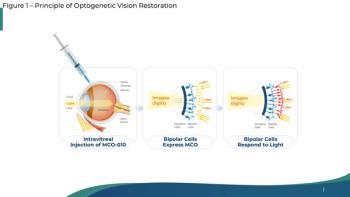
A mutation-agnostic optogenetic gene therapy is in development using multi-characteristic opsin (MCO) to sensitize the retinal bipolar cells to detect light.

ATSN-101, a gene therapy for GUCY2D-associated Leber congenital amaurosis, has demonstrated clinically meaningful improvements in vision at the highest dose with no drug-related serious adverse events 6 months post-treatment in ongoing Phase I/II clinical trial.

According to the company, OCU410ST uses an AAV delivery platform for the retinal delivery of the RORA (RAR Related Orphan Receptor A) gene.

Study finds that 1 in 3 children with sickle cell disease has retinopathy.

The company presented topline Phase I/II first-in-human results at the 127th AAO annual meeting in San Francisco, demonstrating significant improvement in visual field, in concordance with trended improvements in visual acuity and functional vision.