











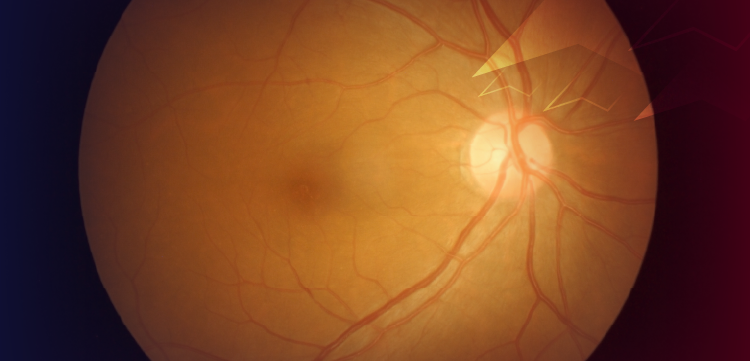





Within 4 months of AEYE-DS's deployment, diabetic retinopathy screening adherence increased from 29 percent to 49 percent.
Within 4 months of AEYE-DS's deployment, diabetic retinopathy screening adherence increased from 29 percent to 49 percent.

In a study, a team of Korean researchers developed an AI model using OCT images to predict neovascular AMD treatment outcomes after anti-VEGF injections. The model highlights AI’s potential in personalized ophthalmic care.
Avant Technologies and Ainnova Tech have partnered to develop a low-cost retinal camera integrated with Ainnova’s Vision AI platform for early detection of ocular and systemic diseases. The technology will be marketed as a SaaS platform for primary care settings.

Options empower patients and providers to decrease treatment burden

A recent cohort study revealed low adoption of FDA-approved AI-based diabetic retinopathy detection, with less than 5% of diabetic patients receiving ophthalmic imaging. Researchers emphasize the need for improved awareness, cost-effectiveness, and integration to increase diabetic retinopathy screening rates.

Julie Schallhorn, MD, MS, also is an associate professor of ophthalmology at the University of California San Francisco, has drawn upon her bioengineering background to develop a device to simplify eye drop administration.
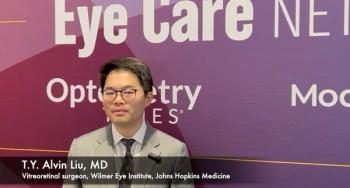
During a conversation at the American Academy of Ophthalmology annual meeting in Chicago, T.Y. Alvin Liu, MD, discussed plans for the James P. Gills Jr., MD, & Heather Gills Artificial Intelligence Innovation Center at the Wilmer Eye Institute at Johns Hopkins Medicine.
In a presentation at the American Academy of Ophthalmology annual meeting in Chicago, T.Y. Alvin Lu, MD, a retina specialist at Johns Hopkins Medicine, discussed the application of large language models (LLMs) in revenue cycle management (RCM).

In the first five months of the program at Henrietta Johnson Medical Center, 26% of patients with images gradable by EyeArt tested positive for either more-than-mild or vision-threatening diabetic retinopathy.

A home self-imaging device can provide ophthalmologists with actionable insight between office visits for AMD

AEYE Health will attend the American Academy of Ophthalmology (AAO) Annual Meeting, from October 18-21 in Chicago.

Applied Science, Inc. (ASI) is expanding its AdaptivMD chronic care workflow technology

A team of researchers at Arizona State University has developed tools to aid in the diagnosis of myopic maculopathy.

In a study, a team of UCLA investigators detail a deep-learning model pre-trained on 2D scans that accurately predicts disease-risk factors from 3D medical-scan modalities.

The company’s flagship product is Reti-CVD, an AI diagnostic solution that autonomously assesses future cardiovascular disease risk using a retina scan.

Digital exclusive article on red-blue-green ultrawidefield (UWF) imaging
The general secretary of the European Society of Retina Specialists (EURETINA) says the future of AI is here
Dvey-Aharon is an internationally known AI expert and the inventor of AEYE-DS.

Retina is a rapidly advancing field with promising research, technology, and treatment areas. Two stand out as particularly exciting.

The contract research organization and technology solution is for the execution of ophthalmology clinical trials.

This certification covers AI based regulatory requirements for the company's platform for AI imaging and diagnostic tools.

Australian researchers have found that clinical registries may be an untapped font of information for artificial intelligence.

Researchers from the Shanghai Jiao Tong University School of Medicine developed a deep learning–based model for early identification of myopia, strabismus, and ptosis using 1419 facial photographs from 476 individuals.