




















The latest innovations are in focus at the 127th annual meeting of the American Academy of Ophthalmology, being held at the Moscone Center in San Francisco.

The latest innovations are in focus at the 127th annual meeting of the American Academy of Ophthalmology, being held at the Moscone Center in San Francisco.

The collaboration, fueled by a $5 million donation from Knights Templar Eye Foundation (KTEF), will introduce a free and open VR simulation program for ophthalmologists and trainees worldwide.

The company’s AI CLAIR technology platform has received FDA breakthrough device status, and if cleared by the FDA will deliver real-time cardiovascular disease risk assessments through routine eye exams.

According to a study by a team of scientists led by Duke-NUS Medical School, pursuing fair AI for healthcare requires cross-disciplinary collaboration to translate methods into real-world benefits.

This effort will advance screening technology at Canada’s foremost specialist care provider in diabetes and endocrinology.

The collaboration will drive an effort to develop predictive analytics to enable early detection of eye diseases and more personalized treatments to prevent vision loss for people with serious eye diseases.

Altris also has advanced AI models to enable vendor-neutral retina layers segmentation as well as detection and visualization of more than 70 retina conditions such as dry and wet age-related macular degeneration, geographic atrophy, diabetic retinopathy, diabetic macular edema and central retinal vein occlusion.

According to the companies, the partnership will roll out a proprietary system that has earned FDA breakthrough designation, one of the few ophthalmic devices to achieve this status in almost a decade.

VR will have very useful applications in many fields. One of those fields is ophthalmology.
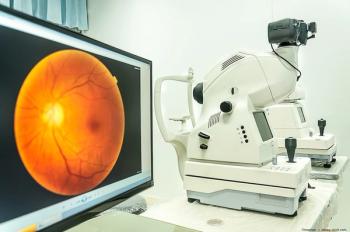
The company has released a video presentation that highlights combining genetic markers with high-resolution retinal imaging to assist in the detection and treatment of blindness and multiple systemic diseases.

The use of VR mazes hold an intrinsic advantage compared with physical mazes in the ability to control conditions and test various patterns with reliability, participant safety, and repeatability.

Clinicians should be alert to the fact that while artificial intelligence (AI) is capable of generating ideas and references, it is crucial to thoroughly vet and fact-check any medical research content that AI produces.

According to Orbis International, the technology proves to be a practical solution in low-resource communities for tackling the leading cause of vision loss among working-age adults.

The companies plant to create a comprehensive resource that provides valuable insights into health outcomes, medication adherence, and the effectiveness of various treatment protocols.