




Diabetic Macular Edema
Latest News
Advertisement
Latest Videos
CME Content















Advertisement
More News

Dilsher S. Dhoot, MD, FASRS, shares insights on avoralstat, a promising treatment for diabetic macular edema, at ASRS 2025.
EYLUXV, a new biosimilar for treating serious eye conditions, gains positive EMA recommendation, promising improved patient access and outcomes.

ANI Pharmaceuticals releases results for ILUVIEN in treating diabetic macular edema.

EYP-1901 shows promising results in reducing treatment burden for diabetic macular edema, offering sustained improvements in vision and safety.
Boehringer Ingelheim initiates THULITE study, exploring an oral treatment for diabetic macular edema, aimed to improve patient care and convenience.

The study will be led by principal investigator professor Noemi Lois, MD, PhD, FRCS(Ed), FRCOphth, at Queen’s University Belfast, in over 20 clinical sites, and plans to enroll 264 patients across the UK with severe DME.

Modern Retina’s recent Case-Based Roundtable focused on next-generation treatments for retinal disease that provide advanced care for neovascular age-related macular degeneration (nAMD) and diabetic macular edema (DME).
Researchers hypothesize that lamivudine was effective in the clinical trial against DME because the drug blocks the activity of inflammasomes.

Breakthrough suprachoroidal injection technique offers promising treatment for diabetic retinopathy, reducing visual threatening complications from 37% to 4% with minimal inflammation and office-based procedure.
Dilsher S. Dhoot, MD, discusses how newer anti-VEGF treatments, particularly aflibercept 8 mg, can provide improved anatomic outcomes and extended treatment intervals for patients with neovascular age-related macular degeneration who show persistent subretinal fluid despite treatment with first-generation agents.

Study reveals faricimab effectively treats diabetic macular edema in underrepresented minorities, showing significant visual acuity improvements and safety across diverse patient populations.

Ophthalmologist Dilraj Grewal explores cutting-edge clinical trials for uveitis treatment, highlighting new targeted therapies that aim to control inflammation and macular edema with fewer steroid-related side effects.

Financing will fund phase 1b trials evaluating its lead candidate, THN391, for the treatment of Alzheimer’s Disease and diabetic macular edema (DME).

Ashvattha Therapeutics announced positive interim phase 2 results for migaldendranib for the treatment of AMD and DME.

Four-year study shows faricimab in treat-and-extend regimen maintains vision for diabetic macular edema patients with significantly fewer injections over time.
Optigo Biotherapeutics presents promising preclinical data at ARVO.

The recombinant human vascular endothelial growth factor receptor (VEGFR)-antibody human complement receptor 1 (CR1) fusion protein will be intravitreally administered in up to 150 patients.
According to Dr. Danzig, the DIAMOND trial demonstrates efficacy of OCS-01, a topical drop, in patients with diabetic macular edema.
KIO-104 is a therapeutic candidate shown to significantly reduce retinal scar formation.

4D-150 is a potential backbone therapy that is designed to provide multi-year sustained delivery of anti-VEGF (aflibercept and anti-VEGF-C) to be targeted to the retina with a single, well-tolerated intravitreal injection.

The company announced 27 abstracts at the Association for Research in Vision and Ophthalmology (ARVO) 2025 Annual Meeting from May 4 to 8 in Salt Lake City.
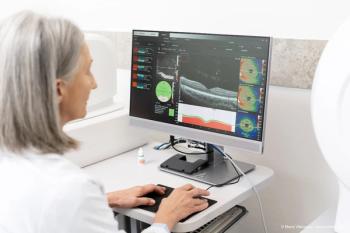
Brazilian researchers used swept-source OCT and OCT-angiography to study the effects of an initial dose of aflibercept on untreated diabetic macular edema in patients.

The FDA did not agree with a supplemental Biologics License Application for the addition of extended dosing intervals of up to 24 weeks across currently-approved indications.
The research team noted that racial subgroups are underrepresented in clinical trials, a factor that should be addressed in future clinical trials.
Advertisement
Advertisement