


Siegfried G. Priglinger, MD, FEBO, weighs in on the emerging rationale for gas-free, position-free macular hole surgery using an ILM flap.
Siegfried G. Priglinger, MD, FEBO, weighs in on the emerging rationale for gas-free, position-free macular hole surgery using an ILM flap.

Patricio G. Schlottmann, MD, examines why injection frequency drives treatment failure in wet AMD and the particular challenges facing patients in Latin America.

Victor M. Villegas, MD, discusses supraorbital vibration as an adjunct to topical anesthesia in a high-volume retina practice.

Posture, operating room setup, and small workflow adjustments can reduce cumulative neck and back strain over time.
Jay Chhablani, MD, on multimodal imaging, OCT biomarkers, and the importance of early diagnosis as treatment options emerge

Matias Iglicki, MD, PhD, discusses why internal limiting membrane peeling deserves greater consideration in carefully selected patients with DME.

Charlie Zhang, MD, reflects on the rising incidence, diagnostic challenges, and multidisciplinary management of immune checkpoint inhibitor–associated uveitis.

Data presented at ARVO 2026 show that high-dose gene therapy boosts central retinal sensitivity in X-linked retinitis pigmentosa, with the phase 3 VISTA study fully enrolled.

In the latest episode of The Retina TL;DR with Dr. Weng, host Christina Y. Weng, MD, MBA, FASRS, talks with Dr. Murdock about how the rise of "Ozempic face" has placed aesthetic injectables at the intersection of oculoplastics and retina.

New pathways are reshaping the management of retinal disease.

Phase 3 data show brolucizumab outperforms laser for PDR vision preservation, with fewer adverse events—while monitoring inflammation risk.
According to the company, the NDA submission is supported by data from the phase 3 DRAGON trial.

SOL-1 data show AXPAXLI extends wet AMD control, delaying fluid rebound and reducing rescue injections while sustaining vision through 52 weeks.

From role models to open doors, Christina Y. Weng, MD, MBA, FASRS, shares insights on career development, women in ophthalmology, evolving training models, and her work as protocol chair for the DRCR Retina Network’s Protocol AO study.

The company noted it expects topline results in June 2026.
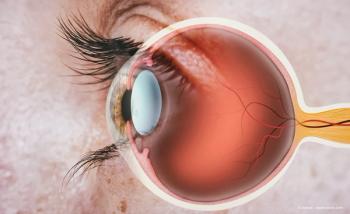
Early phase II results show topotecan episcleral chemoplaque offers accessible, localized retinoblastoma treatment with mixed responses, aiming to expand global eye-sparing care.

In the latest episode of The Retina TL;DR with Dr. Weng, host Christina Y. Weng, MD, MBA, FASRS, talks with Drs. Do, Lad, and Munk about the LIGHTSITE III trial data behind photobiomodulation and what it means for retina practice.

The trial will evaluate EC-104 fluocinolone acetonide (FA) extended release for the treatment of diabetic macular edema (DME).

Explore latest RVO care: faricimab, Eylea HD, and biosimilars that cut injection burden and protect vision from macular edema.


The ongoing GARDian3 study is designed to assess whether a single subretinal administration of OCU410ST can slow structural disease progression in patients with ABCA4-associated retinopathy.

Tattoo ink inflammation increasingly triggers uveitis, often harming vision and requiring systemic steroids.

Images showed that Parkinson’s disease is associated with a thicker photoreceptor nuclear layer and a thinner layer of photoreceptor processes.

FDA fast-tracks RTx-015, an optogenetic gene therapy aiming to restore vision in late-stage retinitis pigmentosa.

MALBEC (NCT07440225) is a randomized, double-masked trial evaluating the safety and efficacy of MK-8748 at 2 dose levels versus control (aflibercept 2mg).

In the JADE trial, OLN324 demonstrated numerically greater visual acuity gains and evidence of sustained retinal drying with fewer retreatments during a treatment-free follow-up period, compared with faricimab.


Three real-world GA cases reveal why early imaging-guided treatment matters, how fast vision can decline, and how to manage CNV risk with anti-VEGF.

The Opti-GAIN study from Complement Therapeutics is assessing the safety, tolerability, and preliminary efficacy in GA secondary to age-related macular degeneration (AMD) of CTx001.

Study finds low-vision rehab boosts daily function and quality of life, but exposes gaps in long-term data and diverse research.