
Videos
The Eye Care Network spoke with Sebastian Wolf, MD, PhD, and Sophie Bonnin, MD, PhD, who presented new findings from the OCS-05 phase 2 ACUITY trial.
KOLs in the retina world reflect on advice they would share with fellows beginning their journey into retina, including the vast opportunities in healthcare and the importance of curiosity and collaboration for revolutionary advancements in retina medicine.
Hear highlights from the Vit-Buckle Society and its presence at EURETINA 2025.
ISTH0036 demonstrates potential to prevent fibrosis, reduce retinal fluid, and improve vision in AMD and diabetic macular edema patients.
EURETINA's 25th anniversary meeting attracts 11,000 participants, showcasing cutting-edge research and fostering global networking among retina specialists.
KOLs in the retina world reflect on advice they would share with fellows beginning their journey into retina, including the vast opportunities in healthcare and the importance of curiosity and collaboration for revolutionary advancements in retina medicine.
Daniela Bacherini, MD, PhD, FEBO, said modern imaging modalities open up new possibilities in the peripheral retinal space.
KOLs in the retina world reflect on advice they would share with fellows beginning their journey into retina, including the vast opportunities in healthcare and the importance of curiosity and collaboration for revolutionary advancements in retina medicine.
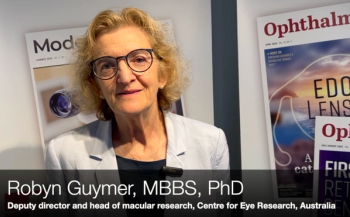
The ultimate goal of redefining endpoints is enabling earlier diagnosis and treatment, said Robyn Guymer, AM, MBBS, PhD, FRANZCO, FAHMS
KOLs in the retina world reflect on advice they would share with fellows beginning their journey into retina, including the vast opportunities in healthcare and the importance of curiosity and collaboration for revolutionary advancements in retina medicine.
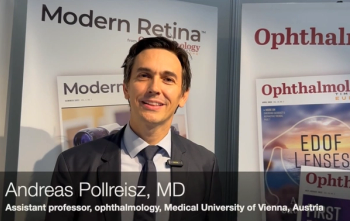
At the EURETINA congress, Prof Pollreisz shared his contemporary approach to multimodal imaging in patients with diabetes.
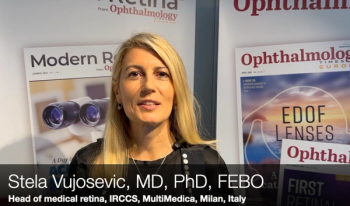
During the EURETINA session, Stela Vujosevic, MD, PhD, FEBO, posed questions about the current staging for diabetic macular edema and diabetic retinopathy.
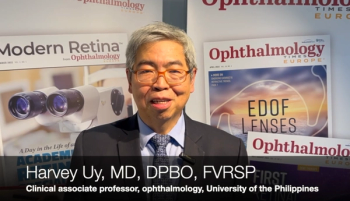
At the EURETINA meeting, Professor Uy described the ways artificial intelligence can augment an existing imaging workflow.
KOLs in the retina world reflect on advice they would share with fellows beginning their journey into retina, including the vast opportunities in healthcare and the importance of curiosity and collaboration for revolutionary advancements in retina medicine.
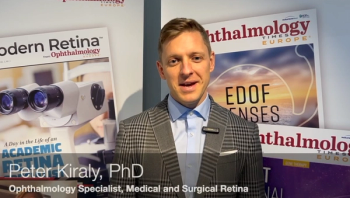
EURETINA 2025: Peter Kiraly, PhD, helps young retinal specialists break into the vitreoretinal space
The EURETINA YOURS program prepares retina specialists for the EBO exam and helps them find training in the competitive subspecialty of vitreoretinal surgery.
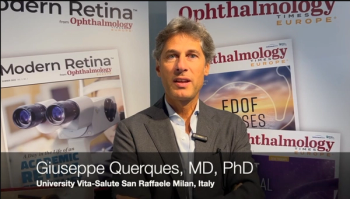
Prof. Querques broke down perifoveal vascular anomalous complex (PVAC) and telangiectatic capillaries (TelCaps) for congress delegates.
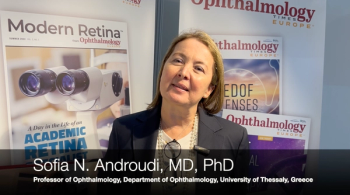
Prof. Androudi said differential diagnoses are more important than ever in the era of cell and gene therapies.
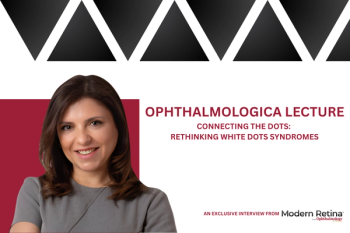
During her Ophthalmologica Lecture at the 2025 EURETINA Congress, Prof Cicinelli explained why it's time for a different approach to white spot syndromes.
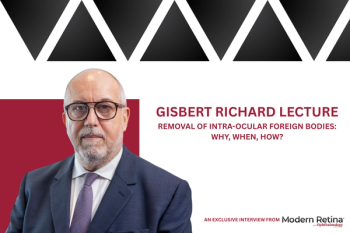
At the 2025 EURETINA Congress, Prof Korobelnik delivered the Gisbert Richard Lecture, focusing on removal of intra-ocular foreign bodies and mitigating ocular trauma.
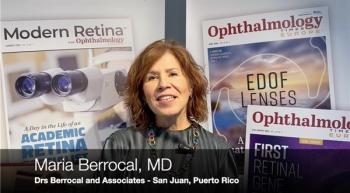
María Berrocal, MD, titled her Kreissig Award Lecture "Throwing away wisdom: How we abandon what works."
Aleksandra Rachitskaya, MD, FASRS, is a member of the Modern Retina editorial advisory board.
The International Retinal Imaging Society (IntRIS) had a significant presence at this year's EURETINA Congress.
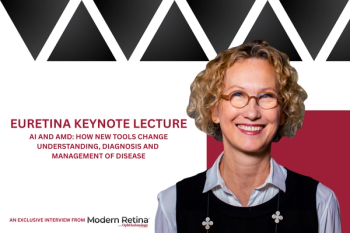
In her keynote address, Prof Schmidt-Erfurth focused on new artificial intelligence tools and their usage in addressing age-related macular degeneration.
This year's EURETINA meeting boasts a crowd of 10,000 attendees, including delegates, industry leaders, and young retina specialists.
Anat Loewenstein, MD, president of EURETINA, announces the EURETINA Innovation Spotlight (EIS) will return on September 3 this year.
Panelists discuss how they encourage hesitant colleagues to adopt geographic atrophy therapies by emphasizing the importance of staying current with clinical trial data, starting with highly motivated patients who mirror trial populations, and express excitement about the future of precision medicine through biomarker-guided treatment selection, advanced imaging with artificial intelligence integration, late-stage trials targeting vision as primary end points, and innovative approaches like gene therapy and cell therapy that may eventually restore vision.
Panelists discuss how they explain treatment success to patients with geographic atrophy by emphasizing that although the disease will continue to progress, clinical trial data show that the therapy slows the rate of growth by 20% to 30% on average, acknowledging that individual patient responses vary along a bell curve and that preserving retinal tissue is inherently meaningful for visual function even without immediate measurable vision improvements.
Advertisement
Advertisement