Carl Danzig, MD, presented results of phase 2 Stairway Trial during the virtual 2020 American Society of Retina Specialists (ASRS) annual meeting.

Lynda Charters Enoch started her early “eye life” at the Schepens Eye Research Institute, Boston, which ultimately culminated in her current position as an Editor of Ophthalmology Times.

Carl Danzig, MD, presented results of phase 2 Stairway Trial during the virtual 2020 American Society of Retina Specialists (ASRS) annual meeting.

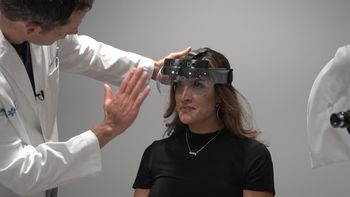
An augmented-reality device provides AMD patients with enhanced reading ability and facial recognition.

Intravitreal liposome-encapsulated bromfenac is under study as a treatment for refractory DME. Results of a pilot study were detailed at the virtual 2020 ASRS annual meeting.

The Audacious Goals Initiative of the National Eye Institute is focused on developing noninvasive imaging advances to help patients with vision loss.

These imaging technologies can help with assessing unexpected structural and vascular retinal and choroidal changes in active and post-treatment toxoplasmic retinochoroiditis.

The study authors hypothesized that patients poorly responding to ranibizumab may have resulted from tachyphylaxis or tolerance to the drug and regarding the nonresponders, they speculated that VEGF-A may not have been the main cause of the neovascular growth.

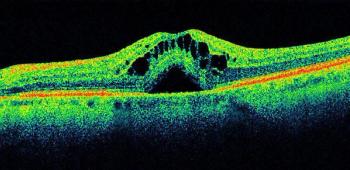
A study of adult patients with diabetes found that bowtie-shaped polarization artifacts do not serve as reliable clinical biomarkers for center-involving diabetic macular edema. What might this mean for clinicians?

Treatment with a single ocriplasmin injection led to clinically meaningful improvements in the patient-reported visual function measured by the VFQ-25 questionnaire over 24 months in patients with symptomatic vitreomacular adhesion.

Only 2% of patients with internal limiting membrane peeling developed an epiretinal membrane compared with 46% with no peeling.

Fundus autofluorescence is a helpful tool for diagnosing central serous choroidopathy and planning treatment.

Immediate administration after radiation therapy is key.

This study provided clinical proof of concept for viral vector-mediated gene supplementation therapy of inherited day blindness caused by pathogenic variants in the cone photoreceptor-specific gene CNGA3.