






















Diabetic Macular Edema
Latest News
Advertisement
CME Content
Advertisement




A panel of experts in ophthalmology and optometry review the diagnosis and treatment of diabetic eye disease including emerging agents in the field.

Results support further research investigating transforming growth factor-β-Induced Gene Human Clone 30 (BIGH3).

The benefit is robust across a variety of demographics and baseline disease characteristics, according to data.

Study offers a real-world scenario of a very specific, but frequent and crucial aspect of the care of patients with diabetes, suggests clinician
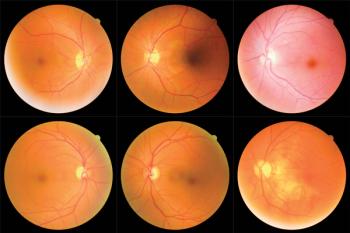
Visual acuity outcomes at 6 months’ post-treatment were similar, regardless of the use of anti-VEGF therapy.

Researchers advocate for intraoperative intravitreal steroid during cataract surgery in patients with DME.

Study explores correlations between functional and structural tests

The number of patients with retinal diseases is steadily increasing in the United States, according to a retrospective study presented during ARVO 2020.

Patents gained less vision in clinical practice than patients on clinical trials

Reductions in macular retinal nonperfusion after anti-VEGF treatment with aflibercept are correlated with improvements in BCVA and central retinal thickness in patients with DR/DME, according to a post-hoc analysis of the VISTA dataset, said Charles C. Wykoff, MD, PhD, during ARVO 2020.

Rates of anxiety and depression increased but were not necessarily tied to disease severity

A retrospective study found that in both patients with type 2 diabetes and non-diabetics, average central macular thickness was lower in Asians than Caucasians. Why is this significant for clinicians?

Theresa Heah, MD, provides an update on AsclepiX’s AXT107, which is derived from a cryptic peptide within collagen IV that works by activating naturally existing, homeostatic mechanisms of angiogenesis.

The results of the Protocol T Extension Study underscore the need for methods to improve long-term visual gains in eyes with diabetic macular edema, according to Dante Pieramici, MD, on behalf of the DRCR Retina Network, during the American Society of Retina Specialists 2020 Virtual Annual Meeting.

Intravitreal liposome-encapsulated bromfenac is under study as a treatment for refractory DME. Results of a pilot study were detailed at the virtual 2020 ASRS annual meeting.

A study of adult patients with diabetes found that bowtie-shaped polarization artifacts do not serve as reliable clinical biomarkers for center-involving diabetic macular edema. What might this mean for clinicians?

An analysis using a large commercial claims database found that almost 3% of patients developed severe diabetic eye disease within 5 years of being diagnosed with type 2 diabetes. Clinical and demographic risk factors were also identified.

A new analysis from the DRCR Network Protocol V showed that many patients with center-involved diabetic macular edema and good vision do not require treatment for visual acuity loss.

Advertisement
Advertisement
Trending on Modern Retina
1
Retina World Congress 2026: Identifying real-world durability gaps in wet AMD treatment
2
Retina World Congress 2026: The case for earlier surgical intervention in diabetic macular edema
3
Retina World Congress 2026: Diagnosing macular telangiectasia in a field of mimickers
4
Retina World Congress 2026: Rethinking macular hole surgery without gas tamponade
5