

















A study by Orbis International found that children with myopia experienced significantly higher levels of depression and anxiety than their peers without vision impairment.

Improvement in vision in intermediate dry AMD demonstrated in LIGHTSITE III trial data
Molecular mechanism discovered to cause photoreceptor degeneration in retinitis pigmentosa
A study by Orbis International found that children with myopia experienced significantly higher levels of depression and anxiety than their peers without vision impairment.
A window into the world of academic retina practice today.

Study demonstrates results of pegcetacoplan as a geographic atrophy therapy.
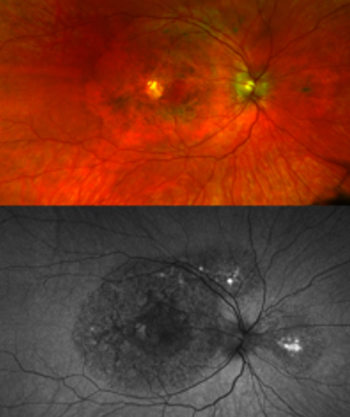
Genetic and clinical research reveals new type of macular dystrophy, a cause of central vision loss.
Modern Retina™ Case-Based Roundtables create an environment for ophthalmology’s brightest minds to examine complex, real-world patient cases in a discussion-based setting. Led by an expert in the topic, the group dissects the case together to improve their knowledge of rare diseases and niche diagnoses. In Fort Lauderdale, Florida, Modern Retina™ hosted Uveitis Case-Based Roundtables. Moderators Thomas Albini, MD, and Eduardo Uchiyama, MD, are uveitis specialists who have encountered intriguing cases in the clinic. Attendees asked questions and reviewed imaging of the cases in hopes of improving their overall patient care. Roundtable 1, led by Dr. Albini and discussed here, investigates two intriguing cases.

Although off-label repackaged bevacizumab syringes appear to satisfy an urgent clinical and financial need for patients with a variety of retinal disorders, they are known to be associated with considerable public health concerns due to the risks posed to patients from compounding pharmacies’ lack of compliance with a variety of FDA requirements.
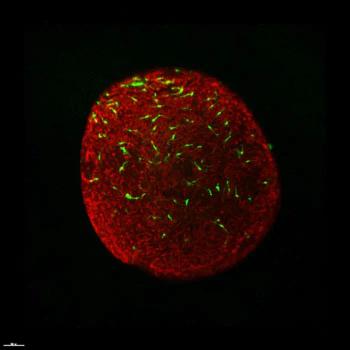
By co-culturing the differentiated microglia with retinal organoids, investigators found they may be able to recapitulate retinal development.

After 10 years, AREDS2 formula shows increased efficacy compared to original formula, benefit of eliminating beta-carotene.

With clearer imaging and enhanced resolution, the new OCT approach could improve medical diagnostic imaging.
Though the speed of traditional guillotine cutters has increased significantly in recent years, there are certain limitations. With the advent of hypersonic vitrectomy, Sunir J. Garg, MD, FACS, explains how retinal surgeons can remove the vitreous gel with more efficiency.
While the DAZZLE trial failed to meet its primary endpoint, KSI-301 demonstrated good initial visual gains and anatomic effects as well as positive durability.
In the study, the faricimab molecule, which is a combined anti-Ang2 and anti-VEGF, performed better than the aflibercept drug in many different ways. Rishi P. Singh, MD, FASRS, summarizes some of these key findings.


A team of investigators has found that a comparison of ranibizumab and aflibercept showed both drugs safe and effective for treating diabetic macular edema.

According to Novartis, the approval is based on year 1 data from the Phase III KESTREL and KITE clinical trials investigating brolucizumab-dbll 6 mg vs aflibercept 2 mg in diabetic macular edema patients.

The company noted that pegcetacoplan, designed to regulate excessive activation of the complement cascade, part of the body’s immune system, which can lead to the onset and progression of many serious diseases, was granted Fast Track designation by the FDA for the treatment of geographic atrophy.

Outlook Therapeutics initially filed the BLA in March or the use of bevacizumab-vikg in the treatment of wet AMD. The company said it will re-submit a revised BLA by September.

Jeff Cleland, PhD, CEO of Ashvattha, discusses safety data for an at-home subcutaneous anti-VEGF injection option in development for the treatment of wet AMD and DME.
Yasha S. Modi, MD, discusses his best tips and tricks for finding and diagnosing infectious uveitis.

According to the company, the ReCLAIM-2 study of elamipretide demonstrates a correlation between ellipsoid zone dysfunction and vision.

Presented at ARVO 2022, research from Mass Eye and Ear hopes to open a new avenue for therapies that are for helping treat patients that develop primary open angle glaucoma.
Carlos Quezada Ruiz, MD, senior medical director at Genentech, discusses “Predicting optimal treatment regimen for patients with neovascular age-related macular degeneration using machine learning.”
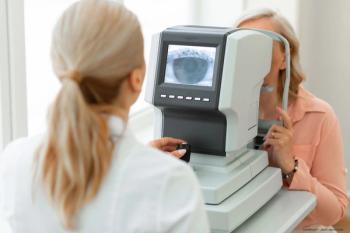
Retina Technologies Inc. is working on a modular digital vision screening platform it says will provide vision testing for the early detection of eye disorders.

Professor Anat Loewenstein, MD, discusses data regarding the efficacy of faricimab at targeting both the VEGF and Ang2 pathways in patients with neovascular AMD and diabetic macular edema.

In a patient survey, 66% of respondents said AI plays a large role in their diagnosis and treatment and thought it was important.