














At ASRS in New York, Matthew Starr, MD, presented, “Factors Associated With Fluctuations in Central Subfield Thickness in Patients With Diabetic Macular Edema Using 2 Clinical Trial Databases.”

At ASRS in New York, Matthew Starr, MD, presented, “Factors Associated With Fluctuations in Central Subfield Thickness in Patients With Diabetic Macular Edema Using 2 Clinical Trial Databases.”

At ASRS in New York City, Charles Wykoff, MD, presented a talk entitled, “Suprachoroidal Delivery of RGX-314 Gene Therapy for Diabetic Retinopathy: Phase II ALTITUDE Study.” The trial demonstrated large improvements for patients with diabetic macular edema (DME) and non-proliferative diabetic retinopathy (NPDR), with notable improvements according to the Diabetic Retinopathy Severity Scale (DRSS).

The future risk of the development of new-onset vision-threatening diabetic retinopathy, diabetic macular edema, and proliferative diabetic retinopathy can be predicted using the patient’s retinopathy status and hemoglobin A1c value.

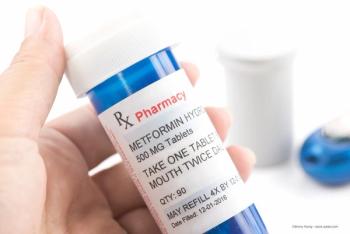
Metformin, a frequently prescribed drug to treat diabetes, could be a novel therapy for AMD.

At ASRS 2022 in New York City, New York, Rishi Singh, MD, is presenting, “12-Month Results of EYP-1901 Vorolanib in a Bioerodible Durasert Insert for nAMD: The DAVIO Trial.” The Phase 1 trial showed a reduction in treatment burden over 12 months as well as a favorable safety profile.

Investigators from Thailand took a close look at retinal fluid fluctuations in Thai patients with wet age-related macular degeneration (AMD) and devised a better way to measure the fluctuations in the central subfield thickness (CST).

Christopher Henry, MD, presented a talk entitled, “Efficacy of Suprachoroidal Triamcinolone Acetonide Injectable Suspension in the Treatment of Macular Edema in Patients With Chronic Uveitis,” at ASRS 2022 in New York City, New York.
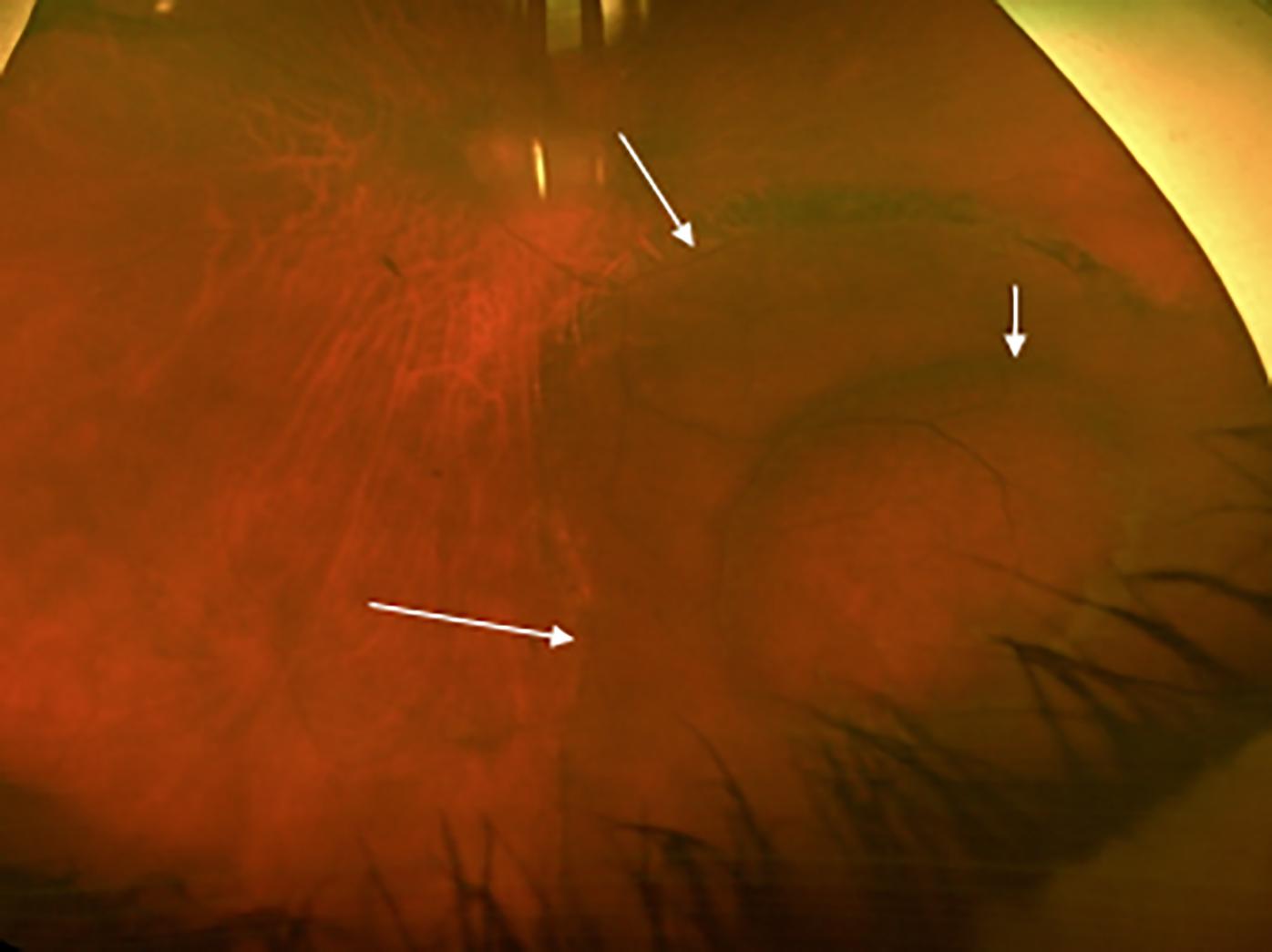
Rhegmatogenous detachments increased with age; myopia, trauma, and history of retinopathy were common underlying risk factors for development of rhegmatogenous retinal detachments.

At ASRS in New York City, New York, David Eichenbaum, MD, presented “Efficacy, Durability, and Safety of Faricimab in Diabetic Macular Edema: 2-year Results on the Phase 3 YOSEMITE and RHINE Trials.”

Treatment with faricimab in patients with neovascular AMD achieved improvements in the visual acuity, central subfield thickness, and pigment epithelial detachments.

At ASRS 2022, Raj K. Maturi, MD, presented a talk entitled, “UBX1325, A Novel Senolytic Therapy for Treatment- Experienced Patients With Chronic DME or Wet AMD: 24-Week Results of a Phase 1 Study.”

At ASRS in New York City, New York, Justis Ehlers, MD, presented a talk entitled, “Higher Order OCT Feature Assessments of the Impact of Fluid Dynamics on Visual Acuity in Neovascular AMD in a Phase III Clinical Trial: The Importance of Outer Retinal Integrity.” Here he discusses the findings.

Albert J. Augustin, MD, presented a talk entitled, “First Results of the Miniature Telescope in Dry AMD” in Fort Lauderdale, Florida. The Galilean telescope device offers visual improvements for patients with late-stage AMD.

A team of investigators at the Agency for Science, Technology and Research in Singapore have developed a bio-functional thermogel, a type of synthetic polymer, to prevent retinal scarring caused by failed retinal detachment repair surgery.

A team of investigators from Johns Hopkins Medicine say they’ve discovered that levels of a specific protein appears to help accurately predict whether people with the wet form of age-related macular degeneration may need lifelong, frequent eye injections to preserve vision or if they can be safely weaned off the treatments.

Foundation Fighting Blindness is a driving force in advancing retinal gene therapies into clinical trials.

Rahul Khurana, MD, offers updates and details about the Aaviate study, which is investigating a possibly once-and-done gene therapy option for macular degeneration via suprachoroidal drug delivery.

The 40th annual Scientific Meeting of the American Society of Retina Specialists is scheduled for July 13-16, 2022, in New York.

Justis P. Ehlers, MD, dissects the revelations from the data in the Phase 3 Hawk clinical trial regarding the impact of central subfield thickness, volatility and the overall impact on visual acuity.

A team of investigators at Flinders University in Australia have found that a specific cell within the retina appears to be particularly good at housing Ebola and other viruses.

A poll for retina specialists regarding their attendance at the 2022 American Society of Retina Specialists 40th Annual Scientific Meeting in New York City, New York. This poll is now closed.
Dilsher Dhoot, MD, discusses the post hoc analysis of the Copernicus and Galileo trials, which investigated if a delay in treatment would affect visual acuity gains or change in anatomy.

According to the company, the primary outcome of the MGT009 study is safety, and botaretigene sparoparvovec treatment was found to be generally safe and well-tolerated.

Richard Rosen, MD, shares insights on how imaging can capture hyalocytes and their movement without the use of dyes.

Survey respondents point to a perceived gap in treatments for uveitic macular edema, document interest in suprachoroidal drug delivery.